Last updated: October 20, 2026
Quick Answer
Tarragon tuna salad is a bright, herb-forward variation on classic tuna salad that swaps or supplements standard seasonings with fresh or dried tarragon, lemon, and Dijon mustard. It takes about 15 minutes to prepare, needs no cooking, and tastes best after 30 minutes of chilling so the anise-like herb notes settle into the mayonnaise or yogurt base.
Key Takeaways
- Tarragon tuna salad uses tuna, a creamy binder (mayonnaise, Greek yogurt, or sour cream), fresh or dried tarragon, lemon, and Dijon mustard.
- Fresh tarragon has a licorice-like, slightly sweet flavor that is stronger and brighter than the dried version.
- Dried tarragon works as a substitute at roughly one-third the quantity of fresh.
- Properly refrigerated tarragon tuna salad lasts 3 to 4 days at or below 40°F.
- Fishy-tasting tuna salad usually means low-quality canned tuna, insufficient acid, or tuna that wasn’t drained and pressed dry.
- The salad can be made mayo-free using Greek yogurt, avocado, or a vinaigrette-based dressing.
- It fits comfortably into keto and low-carb eating plans when served without bread.
- Tarragon tuna salad can be prepared up to two days ahead if stored correctly.
What Is Tarragon Tuna Salad and How Do You Make It
Tarragon tuna salad is canned tuna combined with a creamy dressing, fresh herbs, and acid, where tarragon serves as the defining flavor note instead of dill or plain parsley. The dish is assembled cold, requires no cooking equipment beyond a mixing bowl, and is typically served chilled on bread, in a wrap, or over greens.
The basic method follows four steps:
- Drain a 12-ounce can of solid white tuna thoroughly and press it dry with a fork or fine-mesh strainer.
- Combine mayonnaise, chopped fresh tarragon, parsley, chives, lemon zest, lemon juice, Dijon mustard, and black pepper in a bowl.
- Fold in the tuna until evenly coated.
- Chill for about 30 minutes before serving to let the flavors meld.
This base formula is widely used across current recipe platforms and remains the standard entry point for home cooks exploring tarragon tuna salad for the first time.
Best Tarragon Tuna Salad Recipe
The best version balances creaminess, acidity, and herb intensity rather than relying on mayonnaise alone. Recipes gaining traction in 2026 lean toward brighter, more layered flavors by pairing tarragon with lemon-mustard dressings, hard-boiled eggs, and crisp vegetables.
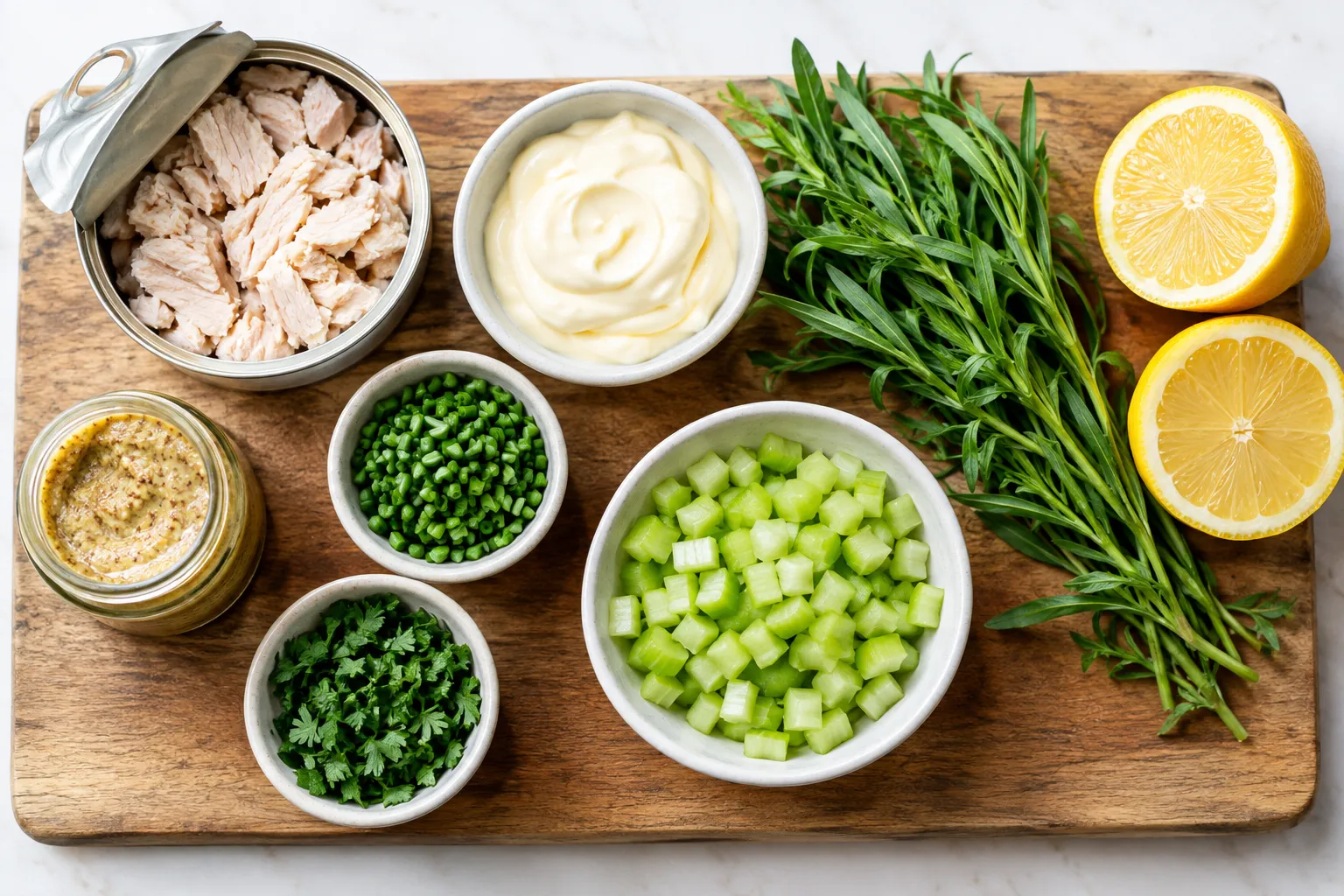
A well-balanced recipe includes:
- Tuna: 12 ounces solid white tuna in water, drained and pressed dry
- Creamy base: 1/3 cup mayonnaise (or Greek yogurt for a lighter version)
- Herbs: 2 tablespoons fresh chopped tarragon, 1 tablespoon chives, 1 tablespoon parsley
- Acid: 1 tablespoon lemon juice, 1 teaspoon lemon zest
- Seasoning: 1 teaspoon Dijon mustard, black pepper to taste
- Texture add-ins: diced celery, chopped walnuts, or halved grapes
Choose the egg-and-mustard version if you want a heartier, protein-dense salad. Choose the grape-and-walnut version if you prefer a sweeter, crunchier bite reminiscent of a Waldorf-style salad.
What Does Tarragon Taste Like
Tarragon tastes like a cross between licorice, anise, and fresh grass, with a subtle peppery finish. It is more assertive than parsley or dill and pairs especially well with lemon, mustard, and seafood because its sweetness cuts through richness without overpowering it.
Fresh tarragon delivers a sharper, greener version of this flavor, while dried tarragon mellows into something closer to a background herbal note. Cooks unfamiliar with tarragon sometimes mistake it for fennel or basil, but its licorice character is distinct once tasted side by side.
Tarragon Tuna Salad vs Regular Tuna Salad
Tarragon tuna salad differs from regular tuna salad primarily in aromatic complexity, not in basic structure. Both use canned tuna and a creamy binder, but tarragon tuna salad adds an herbal, slightly sweet dimension that standard recipes (built on celery, onion, and mayonnaise alone) typically lack.
| Feature | Regular Tuna Salad | Tarragon Tuna Salad |
|---|---|---|
| Primary herb | None or parsley | Fresh or dried tarragon |
| Flavor profile | Savory, mild | Savory, bright, slightly anise-like |
| Common additions | Celery, onion, pickles | Lemon zest, Dijon, chives |
| Best pairing | Plain bread, crackers | Rye bread, greens, pepper boats |
Choose regular tuna salad if you want a neutral base for heavy add-ins like pickle relish. Choose tarragon tuna salad if you want a more refined, restaurant-style flavor without extra effort.
Can You Make Tuna Salad Without Mayo
Yes, tuna salad can be made without mayonnaise by substituting Greek yogurt, mashed avocado, or a lemon-olive oil vinaigrette as the binder. Each swap changes texture and flavor slightly but keeps the salad cohesive enough to scoop or spread.
Greek yogurt produces a tangier, lower-fat result and works particularly well with tarragon because the acidity in yogurt echoes the lemon notes already in the dressing. Avocado creates a richer, creamier texture with a mild flavor that lets the tarragon stand out more. A vinaigrette-based version is lightest and best suited for serving over greens rather than in a sandwich.
How Long Does Tarragon Tuna Salad Last in the Fridge
Tarragon tuna salad lasts 3 to 4 days when stored at or below 40°F in a sealed container. This guidance applies to mayonnaise-based and yogurt-based versions alike, provided the salad was refrigerated within two hours of preparation.
To maximize shelf life:
- Divide the salad into shallow containers so it cools quickly and evenly.
- Keep the refrigerator at or below 40°F, checking with a thermometer if possible.
- Discard any portion left at room temperature for more than two hours.
- Avoid refreezing tuna salad once thawed, as texture and safety both degrade.
If the salad develops a sour smell, watery separation beyond normal moisture, or a dull gray tinge to the tuna, discard it rather than taste-testing for spoilage.
Why Does My Tuna Salad Taste Too Fishy
A fishy taste usually comes from three sources: lower-grade canned tuna, insufficient acid in the dressing, or tuna that was not drained and pressed dry before mixing. Each of these amplifies the natural oceanic compounds in tuna that become more noticeable without balancing ingredients.
Common mistake: skipping the step of pressing tuna in a fine-mesh strainer before mixing. Residual liquid dilutes the dressing and intensifies fishy notes instead of masking them.
To fix an overly fishy batch:
- Press the tuna firmly to remove excess liquid.
- Add an extra teaspoon of lemon juice or a splash of white wine vinegar.
- Increase the tarragon and Dijon mustard slightly to add brightness.
- Consider switching to a higher-quality solid white tuna rather than chunk light.
Can I Use Dried Tarragon Instead of Fresh
Yes, dried tarragon can replace fresh tarragon at roughly one-third the quantity, since drying concentrates the flavor. For a recipe calling for 2 tablespoons fresh tarragon, use about 2 teaspoons dried tarragon instead.
Dried tarragon works especially well in recipes that rest for a few hours before serving, such as pasta-based tuna salads, because the extra time allows the dried herb to rehydrate and release flavor fully. For salads served immediately, fresh tarragon delivers a more vivid, grassy result.
What Can I Substitute for Tarragon
Chervil is the closest substitute for tarragon, offering a similar mild anise flavor with less intensity. Fennel fronds and a small pinch of anise seed can also approximate the licorice note, though both require careful measuring to avoid overpowering the salad.
Basil is a reasonable backup when none of the above are available, though it shifts the flavor profile toward something closer to an Italian-style tuna salad rather than a classic tarragon version. Use half the amount called for with any substitute and adjust to taste, since each alternative herb has a different intensity curve.
Is Tarragon Tuna Salad Keto Friendly
Yes, tarragon tuna salad is keto friendly when made with mayonnaise or avocado and served without bread. The dish is naturally high in protein and fat, with minimal carbohydrates coming only from small amounts of celery, onion, or lemon juice.
A popular keto-style serving method stuffs the tarragon tuna mixture into halved bell peppers, which adds volume and crunch without significant carbs. This approach also appeals to anyone following a lower-carbohydrate, high-protein eating pattern rather than strict keto macros.
What Bread Should I Serve With Tuna Salad
Rye bread and whole-grain sourdough pair especially well with tarragon tuna salad because their slightly sour, dense crumb stands up to the creamy filling without becoming soggy. Lighter options like butter lettuce wraps or mustard-flavored rolls work well for those avoiding bread or wanting a lighter presentation.
For a heartier sandwich, toast the bread first to create a textural contrast with the cool, creamy salad. For open-faced presentations, a dense multigrain slice holds up better than soft white bread, which tends to tear under the weight of the filling.
Common Mistakes When Making Tuna Salad
The most common mistakes are skipping the dry-press step, under-seasoning with acid, and using too much mayonnaise relative to tuna. Each of these leads to a watery, bland, or overly heavy final product.
- Mistake 1: Not draining tuna well, which waters down the dressing.
- Mistake 2: Forgetting lemon juice or vinegar, leaving the salad tasting flat or fishy.
- Mistake 3: Overloading on mayonnaise, which masks the tarragon instead of complementing it.
- Mistake 4: Skipping the chill time, which prevents flavors from fully combining.
Edge case: if using oil-packed tuna instead of water-packed, reduce the mayonnaise slightly since the tuna itself carries more fat and moisture.
Where Can I Buy Premade Tarragon Tuna Salad
Premade tarragon tuna salad is less common in standard grocery delis than classic tuna salad, but it can sometimes be found at specialty grocers, gourmet delis, or buffet-style restaurant chains known for herb-forward salads. Checking the prepared foods section of higher-end supermarkets is the most reliable approach, since tarragon is considered a more refined herb than what mass-market delis typically stock.
If premade versions are unavailable locally, preparing it at home remains the most consistent way to control herb intensity and freshness.
Can I Make Tarragon Tuna Salad Ahead of Time
Yes, tarragon tuna salad can be made up to two days ahead and stored in a sealed container at or below 40°F. In fact, some pasta-based and restaurant-style versions benefit from resting for several hours, or even up to eight hours, to allow the tarragon dressing to fully penetrate the other ingredients.
Decision rule: if your recipe includes pasta or a vinaigrette-forward dressing, make it ahead for deeper flavor. If your recipe is mayonnaise-heavy with fresh herbs, serve within a day for the brightest taste, since fresh tarragon loses some vibrancy over time.
Equipment
- Mixing bowl
- Fine-mesh strainer or colander
- Sharp knife and cutting board
- Measuring spoons
- Airtight storage container
Ingredients
- 12 oz solid white tuna in water, drained
- 1/3 cup mayonnaise
- 2 tbsp fresh tarragon, chopped (or 2 tsp dried)
- 1 tbsp fresh chives, chopped
- 1 tbsp fresh parsley, chopped
- 1 tsp lemon zest
- 1 tbsp lemon juice
- 1 tsp Dijon mustard
- Black pepper, to taste
- Optional: 1/4 cup diced celery, 1/4 cup halved grapes, or 1/4 cup chopped walnuts
Instructions
- Drain the tuna and press it dry using a fine-mesh strainer.
- In a mixing bowl, combine mayonnaise, tarragon, chives, parsley, lemon zest, lemon juice, Dijon mustard, and pepper.
- Fold in the drained tuna until evenly coated.
- Add optional celery, grapes, or walnuts if using.
- Cover and chill for 30 minutes before serving.
Nutrition (Per Serving, Approximate)
| Nutrient | Amount |
|---|---|
| Calories | 220 |
| Protein | 22g |
| Fat | 14g |
| Carbohydrates | 2g |
Notes
- Press tuna dry before mixing to avoid a watery final texture.
- Use pasteurized, commercial mayonnaise for food safety, especially when serving to children or pregnant individuals.
- Chill mixing bowls and utensils beforehand to keep the salad colder for longer during assembly.
Recipe Details
Recipe Subtitle: A bright, herb-forward update on classic tuna salad built around fresh tarragon and lemon.
Recipe Description: Tarragon tuna salad combines flaked solid white tuna with a creamy, herb-infused dressing built on fresh tarragon, lemon, and Dijon mustard. It comes together in about 15 minutes, requires no cooking, and delivers a refined flavor profile suited for sandwiches, lettuce wraps, or low-carb pepper boats.
Recipe Keywords: tarragon tuna salad, tuna salad recipe, herb tuna salad, keto tuna salad, tarragon recipes, no-mayo tuna salad, tuna salad sandwich filling
Difficulty Level: Easy
Preparation Time: 15 minutes
Cooking Time: 0 minutes
Rest Time: 30 minutes
Cooking Temperature (Fahrenheit): Not applicable (no-cook recipe)
Calories: Approximately 220 per serving
Best Season: Spring and summer, ideal for light lunches and picnics
Cooking Methods: No-cook, mixing, chilling, straining
Cuisines Suggestions: French-inspired, American deli, Mediterranean
Recipe Badges: Gluten-Free Adaptable, High-Protein, Quick Prep
Recipe Keys:
- Press tuna dry for the best texture.
- Balance mayonnaise with lemon and mustard to avoid fishy flavor.
- Chill at least 30 minutes for fully developed flavor.
FAQs
Can I freeze tarragon tuna salad? Freezing is not recommended because mayonnaise-based dressings separate and become watery after thawing, ruining the texture.
Is fresh or dried tarragon better for this recipe? Fresh tarragon delivers a brighter, more vivid flavor and is preferred for salads served immediately; dried tarragon works better in recipes that rest for several hours.
Conclusion
Tarragon tuna salad rewards attention to a few key details: drain and press the tuna, balance the dressing with real acid, and let the salad rest so the tarragon’s licorice-like notes fully develop. Whether served on rye bread, tucked into a pepper boat, or tossed with pasta, the dish stays simple to make while delivering a more refined flavor than standard tuna salad. Start with the base recipe above, adjust the herb and acid levels to taste, and store properly to keep it safe and fresh for up to four days.