
Last updated: October 25, 2026
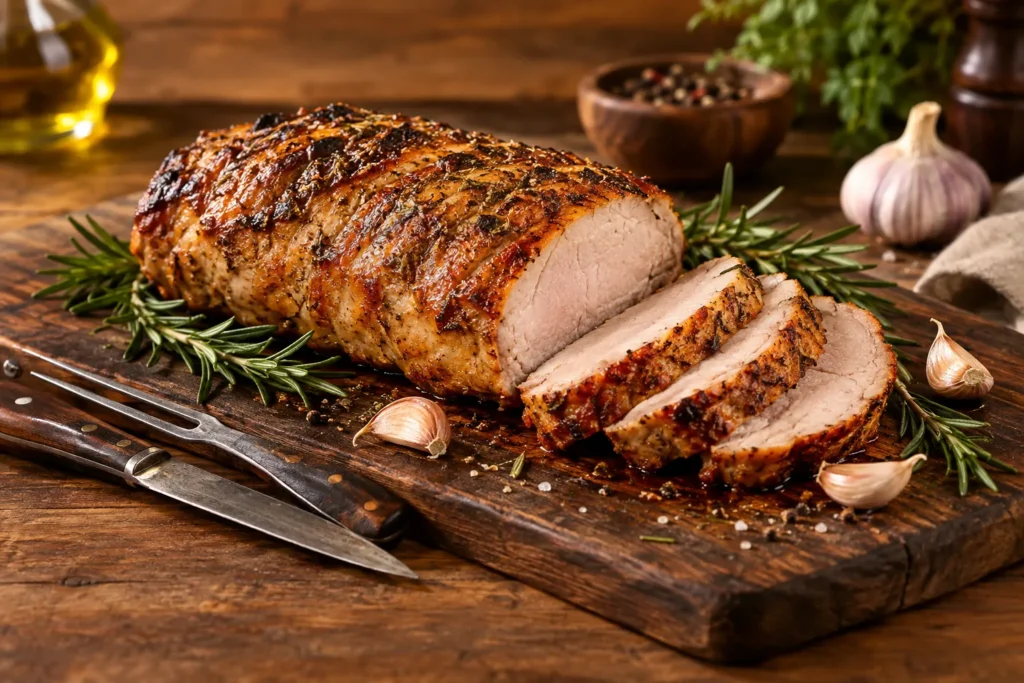
A properly cooked pork roast needs only three things to succeed: the right cut, a reliable thermometer, and patience during the rest period. Most home cooks who struggle with dry pork aren’t failing at seasoning or technique, they’re pulling the meat out of the oven too late and skipping the rest. An easy pork roast, done correctly, is one of the most forgiving centerpiece dishes in a home cook’s rotation.
Quick Answer
An easy pork roast is typically a pork loin, shoulder, or belly seasoned with a simple rub, roasted in the oven at 325°F to 350°F, and cooked to an internal temperature of 145°F before resting for 10 to 15 minutes. Cooking time runs roughly 20 minutes per pound for loin cuts, though slow cooker and braised versions can take 4 to 9 hours for fall-apart tenderness. The method stays easy because it relies on time and a thermometer, not complicated technique.
Key Takeaways
- Pork loin is the most beginner-friendly cut for an easy pork roast because it cooks evenly and carves cleanly.
- The USDA-aligned doneness target for whole-muscle pork is 145°F, followed by a 10 to 15 minute rest.
- Overcooking, not undercooking, is the most common reason pork roast turns out dry.
- A simple herb rub of garlic, rosemary, thyme, and salt works for nearly any cut.
- Slow cookers and Instant Pots both work well for tougher cuts like shoulder.
- Plan for about half a pound of bone-in pork roast per person, or a third of a pound boneless.
- Pork roast and pot roast differ mainly in the cut and cooking liquid used, not the animal.
What’s the Best Cut of Pork for Roasting
Pork loin is the best all-around cut for an easy pork roast because it cooks quickly, slices neatly, and needs minimal prep. Pork shoulder works better for low-and-slow, fall-apart recipes, while pork belly delivers crisp skin for special-occasion roasts.
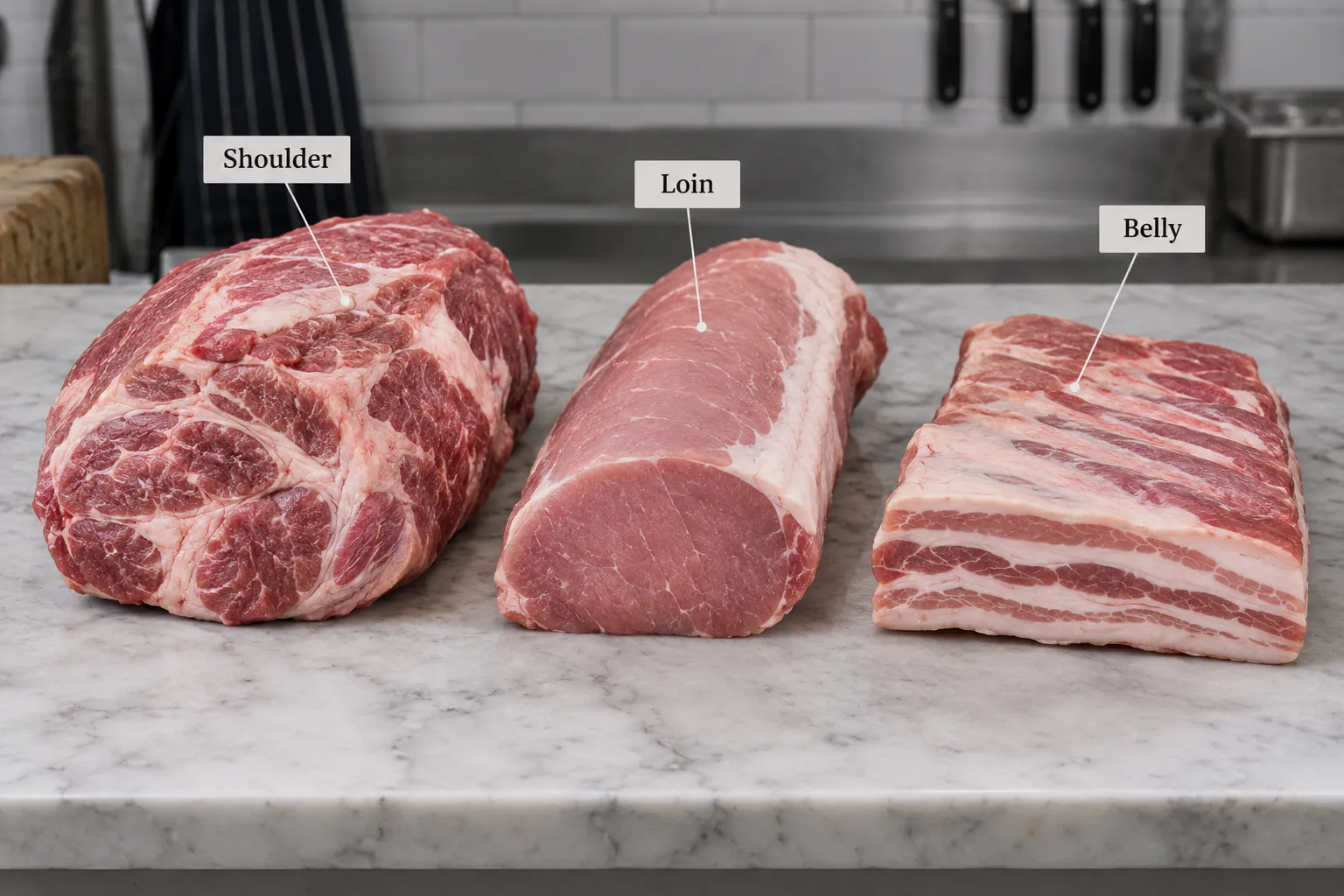
- Pork loin: Lean, mild, roasts in about an hour. Best for weeknight dinners.
- Pork shoulder (Boston butt): Higher fat content, ideal for slow cooker or braised roasts that need hours to break down connective tissue.
- Pork belly: Best for crackling-skin roasts; requires a high-heat start to crisp the skin.
- Crown roast or bacon-wrapped loin: Suited for holiday tables when presentation matters.
Choose pork loin if the goal is speed and simplicity. Choose shoulder if the goal is maximum tenderness and you have several hours to spare.
How Long Does Pork Roast Take to Cook
Cooking time depends on the cut and method, but a general rule for pork loin is about 20 minutes per pound at 350°F. Pork shoulder braised or slow-cooked needs considerably longer because it must break down tough connective tissue.
| Method | Cut | Temperature | Approximate Time |
|---|---|---|---|
| Oven roast | Pork loin | 325-350°F | 1 hour for a 3-4 lb roast |
| Oven braise | Pork shoulder | 275°F covered, 425°F finish | 4-5 hours total |
| Slow cooker | Pork shoulder | Low or High setting | 8-9 hours low, 4 hours high |
| High-heat crackling roast | Pork belly | 220°C start, 160°C fan finish | 1.5-2 hours |
Edge case: a frozen roast always needs extra time, often 50 percent longer, and should never be estimated by weight alone, always confirm with a thermometer.
What Temperature Should Pork Roast Be Cooked To
Pork roast should reach an internal temperature of 145°F, then rest for at least 10 minutes before slicing, according to USDA guidance reflected across major culinary institutions including the National Pork Board. This temperature applies to whole-muscle cuts like loin and shoulder, not ground pork, which requires 160°F.
- Stuffed pork roasts need the stuffing itself to reach 165°F, even if the meat hits 145°F sooner.
- Crackling-skin roasts are often pulled at 149-152°F in the center to account for carryover cooking while the skin crisps.
- Always insert the thermometer into the thickest part of the muscle, avoiding bone or fat pockets, which give false readings.
Choose 145°F as your target if serving loin or shoulder on its own. Choose 165°F only when stuffing is involved.
How Much Pork Roast Do I Need Per Person
Plan on half a pound of bone-in pork roast per person, or about one-third of a pound for boneless cuts. For a dinner party of eight, that means a 4-pound boneless loin or a 5-pound bone-in roast.
- Bone-in roasts lose more weight to bone during carving, so buy slightly more.
- Add 20 percent extra if serving pork as the only protein with few side dishes.
- Leftovers are common and freeze well, so erring slightly larger rarely goes to waste.
Can I Cook Pork Roast in a Slow Cooker
Yes, a slow cooker is one of the easiest ways to cook pork roast, particularly pork shoulder, because the long, low heat breaks down connective tissue without any monitoring. Typical settings run 8 to 9 hours on low or 4 hours on high, often finished with a short rest covered in the cooker.
A simple approach: season the roast, add vegetable broth or apple juice to the base, and cook on low overnight. The result is shreddable, moist pork with minimal hands-on time, ideal for busy weeknights or feeding a crowd without oven space.
Why Does My Pork Roast Come Out Dry
Dry pork roast almost always results from overcooking past 145°F internal temperature or skipping the rest period, which allows juices to redistribute instead of spilling out on the cutting board. Lean cuts like loin are especially sensitive because they have little fat to buffer overcooking.
Common mistakes:
- Pulling the thermometer reading from a fatty pocket instead of the center of the muscle.
- Cooking at too high a temperature for too long, drying out the exterior before the center catches up.
- Slicing immediately instead of resting 10 to 15 minutes.
Decision rule: if using a lean cut like loin, cook at a moderate 325-350°F and pull it at 140-145°F, since carryover heat will finish the job during the rest.
What Seasonings Go Best with Pork Roast
A simple herb rub of garlic, rosemary, thyme, salt, and black pepper works on nearly any cut and requires no marinating time. For sweeter profiles, an applesauce, brown sugar, and ginger glaze pairs well with roasted loin.
- Savory: rosemary, thyme, garlic salt, cracked pepper.
- Sweet-savory: Dijon mustard, garlic, oregano, olive oil (a wet rub favored by official pork industry technique guides).
- Fruit-forward: apple juice, white wine, orange juice as a braising liquid with root vegetables.
- Festive: pear and hazelnut stuffing for special-occasion loin roasts.
Can You Cook Pork Roast from Frozen
Cooking pork roast from frozen is possible in the oven but not recommended for the easiest results, since it extends cooking time unpredictably and makes even seasoning difficult. Slow cookers and Instant Pots should not be used with frozen pork roast due to food safety concerns around prolonged time in unsafe temperature zones.
If starting from frozen is unavoidable, add roughly 50 percent more oven time and rely entirely on a meat thermometer rather than a clock to confirm the 145°F target.
Easy Pork Roast Recipes for Weeknight Dinners
The fastest weeknight approach uses a dry herb rub on pork loin, roasted uncovered at 350°F for about an hour. This style needs no marinating, no special equipment beyond a roasting pan, and delivers dinner in under 90 minutes total.
Another weeknight-friendly option uses an oven bag with a sweet glaze, roasting at 325°F for about an hour, the bag locks in moisture, making this nearly impossible to dry out, even for less experienced cooks.
How Do You Know When Pork Roast Is Done
Pork roast is done when an instant-read thermometer inserted into the thickest part reads 145°F, not by color or juice clarity alone. Color can be misleading, since pink pork at a safe temperature is normal and does not indicate undercooking.
- Insert the thermometer horizontally into the center of the thickest section.
- Check in two spots if the roast is irregularly shaped.
- Remove at 140-143°F for lean cuts to allow for carryover cooking during the rest.
Best Sides to Serve With Pork Roast
Root vegetables like carrots and potatoes roasted alongside the pork absorb pan drippings and require no extra dish. Applesauce, braised greens, and a simple pan gravy round out a traditional plate without extensive additional cooking.
- Roasted root vegetables (carrots, potatoes, shallots) cooked in the same pan.
- Applesauce or fruit chutney to complement savory rubs.
- Braised greens or a simple green salad for contrast.
Can I Make Pork Roast in an Instant Pot
Yes, an Instant Pot works well for pork shoulder specifically, cutting a multi-hour slow cooker process down to about 60-90 minutes under pressure. Loin roasts are less ideal for pressure cooking because the lean meat can overcook quickly and lose texture.
Choose the Instant Pot if time is short and the cut is shoulder or another fatty, collagen-rich cut. Choose the oven or slow cooker for loin to preserve its texture.
How Much Does Pork Roast Cost Per Pound
Pork roast pricing varies by cut and region, with loin generally costing more per pound than shoulder due to higher demand and leaner yield. Shoppers looking for the most economical option for feeding a crowd typically find shoulder a better value per serving than loin or belly.
Pork Roast vs Pot Roast: What’s the Difference
Pork roast refers to a cut of pork cooked by roasting, braising, or slow cooking, while pot roast traditionally refers to beef cooked low and slow in liquid in a covered pot. The terms differ by both the animal and, often, the cooking vessel and method rather than being interchangeable names for the same dish.
A pork shoulder braised in liquid functionally resembles a pot roast in technique, even though it is made from pork rather than beef, the line between the two terms blurs mainly at the method level, not the ingredient level.
Notes
- Let the roast come closer to room temperature for 20-30 minutes before cooking for more even results.
- Always rest the roast tented loosely with foil, not tightly wrapped, to avoid steaming the crust.
- Save pan drippings for a quick gravy; they carry most of the roast’s flavor.
FAQs
Can pork roast be pink in the middle and still be safe to eat? Yes. Pork cooked to 145°F can remain slightly pink in the center and is safe according to USDA guidance; color is not a reliable doneness indicator.
What’s the easiest cut for a first-time pork roast cook? Pork loin is the easiest cut because it requires minimal prep, cooks in about an hour, and carves cleanly for serving.
Do I need to sear pork roast before oven roasting? Searing is optional but improves crust and flavor; braised and slow cooker recipes often sear first, while simple oven roasts can skip this step.
How long should pork roast rest before slicing? Rest pork roast for 10 to 15 minutes before slicing to allow juices to redistribute and prevent moisture loss on the cutting board.
Is a pork roast the same as a pork tenderloin? No. Pork tenderloin is a smaller, faster-cooking cut, while pork roast generally refers to larger cuts like loin, shoulder, or belly meant for longer cooking.
Can I freeze leftover cooked pork roast? Yes, cooked pork roast freezes well for up to three months when wrapped tightly and stored in an airtight container.
Conclusion
An easy pork roast comes down to picking the right cut for the time available, seasoning simply, and trusting a thermometer over guesswork. Loin suits quick weeknight dinners, shoulder suits slow cooker and braised methods, and belly suits special-occasion crackling roasts. Whichever cut is chosen, cook to 145°F, rest the meat fully, and the result will be reliably tender every time. Start with a basic herb rub on a pork loin this week to build confidence before experimenting with glazes or slow cooker variations.