
Last updated: October 20, 2026
Quick Answer
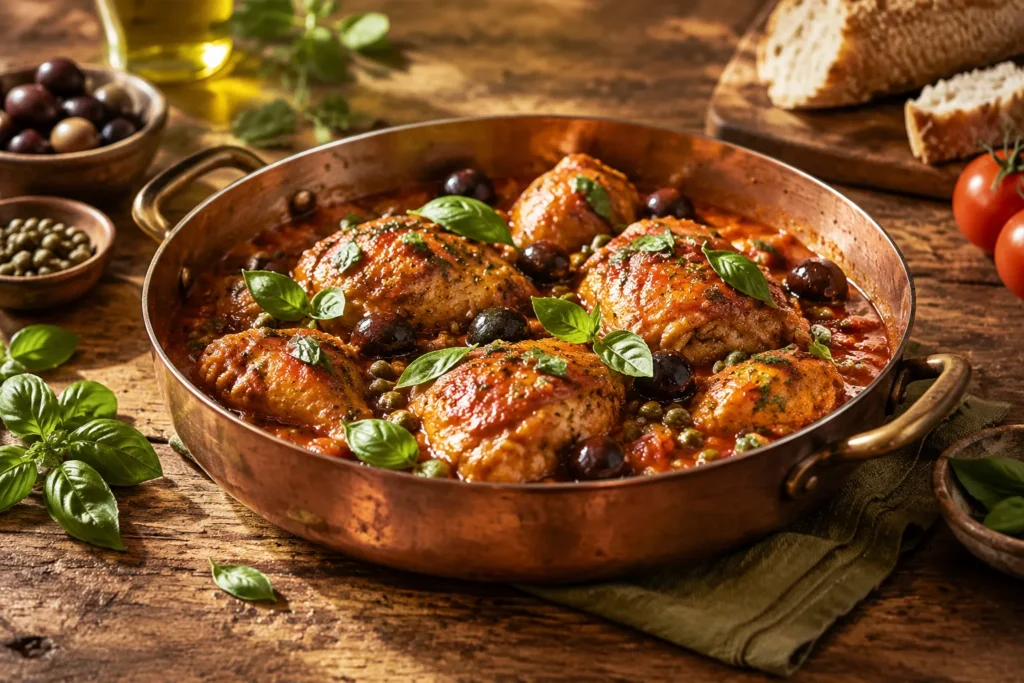
Caper Chicken Cacciatore is a braised chicken dish built on the traditional Tuscan “hunter’s style” method, with capers stirred into the tomato-wine sauce to add a sharp, briny edge that balances the sweetness of the tomatoes. Cooks typically brown chicken pieces, build a sauce with aromatics, tomatoes, and wine, then add capers near the end of cooking to preserve their punch. The result is a bolder, more acidic version of classic cacciatore that pairs well with pasta, rice, or crusty bread.
Key Takeaways
- Capers are brined flower buds that add salt and citrus-like tang to the otherwise rich tomato sauce in chicken cacciatore.
- Adding capers late in the cooking process, rather than at the start, keeps their flavor distinct instead of letting it fade into the sauce.
- Caper Chicken Cacciatore differs from standard cacciatore mainly in its acidity and brine profile, often paired with olives and a splash of vinegar.
- The dish generally takes 45 to 70 minutes total, depending on whether it is pan-braised, oven-baked, or slow-cooked.
- Capers can be swapped for green olives, pickled green peppercorns, or a dash of lemon zest and vinegar if unavailable.
- The dish is naturally gluten-free when served without flour-dredged chicken or paired with gluten-free sides.
- Leftovers freeze well for up to three months, though capers hold their texture best when stirred in after reheating.
What Are Capers and Why Do They Go in Chicken Cacciatore
Capers are the unopened flower buds of the caper bush (Capparis spinosa), harvested and cured in salt or vinegar brine until they develop a sharp, tangy, almost floral bite. In chicken cacciatore, they cut through the richness of tomatoes, wine, and olive oil, giving the sauce a cleaner finish.
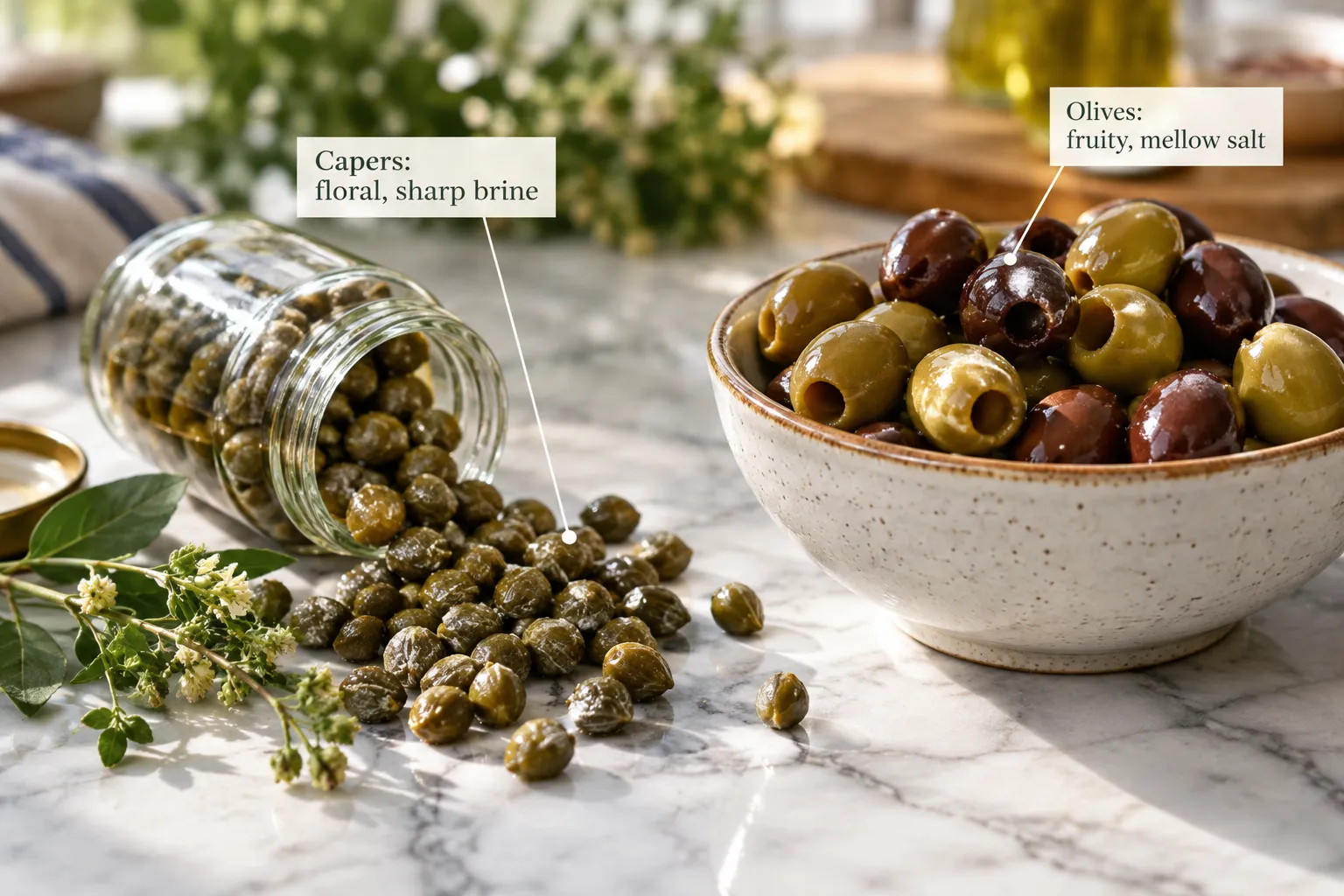
Mediterranean cooking has long used capers to balance fatty or starchy dishes, and chicken cacciatore is a natural fit because the base sauce leans sweet and savory. A small amount goes a long way:
- Flavor role: Adds acidity and salt without needing extra lemon or vinegar.
- Texture role: Provides a small pop against the soft braised chicken and silky sauce.
- Visual role: The green flecks brighten an otherwise deep red-brown dish.
How Is Caper Chicken Cacciatore Different From Regular Cacciatore
Caper Chicken Cacciatore is a briny variation of the classic recipe, distinguished by the addition of capers (often alongside olives) to sharpen the sauce’s acidity. Traditional cacciatore relies mainly on tomatoes, wine, and herbs like oregano and rosemary for flavor, without the sharper brine note.
Several contemporary recipes, including ones recently published by Italian chef sites and large UK retailers, market this variation specifically as a “briny” cacciatore, combining vinegar, wine, olives, and capers for a more assertive flavor profile. Choose the caper version if the base sauce tastes flat or overly sweet; choose plain cacciatore if a milder, more rustic flavor is preferred, especially for children or guests sensitive to salt.
Best Caper Chicken Cacciatore Recipe
The most reliable version follows a four-stage structure: brown the chicken, build the aromatic base, simmer the sauce, then finish with capers and olives. This method is consistent across chef-published and retailer recipes updated in 2026, making it the benchmark approach for home cooks.
Core structure:
- Brown bone-in chicken thighs or breasts in olive oil until golden.
- Sauté onion, garlic, celery, bell pepper, and mushrooms in the same pan.
- Deglaze with dry white or red wine, then add crushed tomatoes, oregano, basil, and a bay leaf.
- Return chicken to the pan, cover, and simmer or bake until the chicken reaches a safe internal temperature.
- Stir in capers and olives during the last 5 to 10 minutes so they stay vibrant rather than muted.
Can I Make Chicken Cacciatore Without Capers
Yes. Capers are a flavor enhancer, not a structural ingredient, so chicken cacciatore holds together fine without them. The dish will simply taste rounder and less tangy, closer to a classic tomato-braised chicken.
Several recipe developers treat capers as optional, listing them as a stir-in addition rather than a core component. This makes sense for cooks feeding people who find brined flavors too strong, or for anyone without capers on hand. Removing them does not change cooking time or method in any meaningful way.
What Can I Substitute for Capers in This Dish
Green olives are the closest substitute, since they share a briny, slightly bitter profile that works with tomato-based sauces. Other options include chopped pickled green peppercorns, a small amount of lemon zest with a splash of white wine vinegar, or chopped Castelvetrano olives for a milder brine.
- Green olives: 1:1 swap by volume; slightly milder but similar texture.
- Lemon zest plus vinegar: Use half the amount, since acidity is sharper without the floral note.
- Pickled peppercorns: Adds heat along with brine; use sparingly.
Choose green olives if the goal is texture and brine together. Choose lemon zest and vinegar if olives are also unavailable and only acidity is needed.
How Long Does Caper Chicken Cacciatore Take to Cook
Caper Chicken Cacciatore typically takes 45 to 70 minutes from start to finish, depending on the cooking method. Pan-braised versions run on the shorter end, while oven-baked versions with thicker cuts take slightly longer.
| Method | Prep Time | Cook Time | Target Temp |
|---|---|---|---|
| Stovetop braise | 15 min | 30-35 min | 170°F (thighs) |
| Oven-baked | 15 min | 28-30 min | 160°F |
| Creamy baked variant | 15 min | 25-30 min at 400°F | 165°F |
| Slow cooker | 15 min | 4-6 hours on low | 165°F |
A quick example: a home cook using bone-in thighs on the stovetop can realistically have dinner ready in under an hour, including prep.
What’s the Difference Between Capers and Olives in Cacciatore
Capers deliver a sharp, concentrated brine in small bursts, while olives contribute a rounder, fruitier saltiness with more fat from their flesh. Both are commonly used together, but they serve slightly different roles in the sauce.
- Capers: Small, intense, best added near the end so they don’t overpower the dish.
- Olives: Larger, mellower, can simmer longer without losing character.
A common mistake is treating them as interchangeable in quantity. Because capers are more concentrated, a tablespoon of capers carries more punch than a tablespoon of chopped olives.
Is Caper Chicken Cacciatore Gluten Free
Yes, in its traditional form, Caper Chicken Cacciatore is gluten-free, since the core ingredients are chicken, tomatoes, wine, vegetables, herbs, capers, and olives. Gluten only becomes a concern if the chicken is dredged in wheat flour before browning or if it’s served over regular pasta.
To keep the dish fully gluten-free, cooks should either skip the flour dredge or substitute a gluten-free flour blend, and serve it with rice, polenta, or gluten-free pasta instead of traditional noodles.
Can You Freeze Leftover Caper Chicken Cacciatore
Yes, leftover Caper Chicken Cacciatore freezes well for up to three months in an airtight container. The chicken and tomato base hold their texture through freezing and reheating better than the capers do.
For best results:
- Remove bay leaves before storing.
- Freeze the chicken and sauce together, but consider stirring in a fresh small handful of capers after reheating to restore brightness.
- Thaw overnight in the refrigerator, then reheat gently on the stovetop rather than in the microwave to avoid drying out the chicken.
Common Mistakes When Making Chicken Cacciatore With Capers
The most common mistake is adding capers too early, which mutes their sharp flavor after prolonged simmering. Other frequent errors include over-salting the sauce (since capers are already salty) and overcooking the chicken past a safe but dry internal temperature.
- Mistake: Adding capers at the start of the simmer. Fix: Stir them in during the last 5 to 10 minutes.
- Mistake: Salting the sauce before tasting. Fix: Season at the end, after capers and olives are in.
- Mistake: Skipping a rest period. Fix: Let the dish sit 5 minutes off heat so the sauce thickens slightly before serving.
What Wine Pairs With Caper Chicken Cacciatore
A medium-bodied red like Chianti or Sangiovese pairs well with the tomato-forward sauce, while a dry white such as Pinot Grigio or Vermentino complements the brininess of the capers if a lighter pairing is preferred. Both options echo the wine already used in the braise, which ties the dish and glass together.
Choose red if the meal leans heavier with mushrooms and olives. Choose white if the dish is lighter, with more capers and fewer rich vegetables.
How Many Capers Should I Use Per Chicken Breast
A reasonable guideline is one to two teaspoons of brined capers per chicken breast or thigh, adjusted to taste. This keeps the brine noticeable without overwhelming the tomato base.
Cooks who enjoy a stronger briny profile can increase to one tablespoon per two servings, especially if olives are omitted from the recipe entirely.
Can I Make This in a Slow Cooker
Yes, Caper Chicken Cacciatore adapts well to a slow cooker, typically braising on low for 4 to 6 hours. Capers should be added about 30 minutes before serving rather than at the start, so their flavor stays distinct instead of fading over the long cook time.
This method suits busy households, since the chicken and vegetables can braise unattended while other parts of the meal, like pasta or rice, are prepared closer to serving time.
Is Caper Chicken Cacciatore Healthy
Caper Chicken Cacciatore is a reasonably balanced dish, offering lean protein from chicken, vitamins from tomatoes and vegetables, and modest calories per serving when prepared without excess oil or cream. The capers themselves add negligible calories but contribute meaningful sodium, so portion control matters for those watching salt intake.
For a lighter version, use skinless chicken breast, reduce added salt to account for the capers and olives, and serve over a modest portion of whole-grain pasta or vegetables instead of a large starch base.
Recipe Card
Title: Caper Chicken Cacciatore Recipe Subtitle: A briny, tomato-braised Italian classic finished with capers and olives. Recipe Description: This Caper Chicken Cacciatore braises bone-in chicken in a rustic tomato, wine, and herb sauce, finished with capers and olives for a sharp, savory edge. It’s a weeknight-friendly dish that still feels special enough for guests, pairing naturally with pasta, rice, or crusty bread. Recipe Keywords: caper chicken cacciatore, chicken cacciatore recipe, Italian braised chicken, briny chicken cacciatore, tomato wine chicken, capers and olives chicken, rustic Italian chicken Difficulty Level: Intermediate Preparation Time: 15 minutes Cooking Time: 35 minutes Rest Time: 5 minutes Cooking Temperature (Fahrenheit): 170°F (internal, thighs) Calories: Approximately 410 per serving Best Season: Fall and winter Cooking Methods: Braising, sautéing, simmering, baking Cuisines Suggestions: Italian, Mediterranean, Tuscan Recipe Badges: Gluten-Free Option, High-Protein, One-Pan Meal Recipe Keys:
- Capers go in last to keep their brine sharp.
- Browning the chicken first builds a deeper sauce flavor.
- Works on the stovetop, oven, or slow cooker with minor timing changes.
Ingredients:
- 4 bone-in, skin-on chicken thighs (about 2 lbs)
- 2 tablespoons olive oil
- 1 medium onion, diced
- 3 garlic cloves, minced
- 1 bell pepper, sliced
- 8 oz cremini mushrooms, sliced
- 3/4 cup dry white or red wine
- 1 can (28 oz) crushed tomatoes
- 1 teaspoon dried oregano
- 1/2 teaspoon dried rosemary
- 1 bay leaf
- 2 tablespoons brined capers, drained
- 1/3 cup pitted green or black olives
- Salt and black pepper to taste
- Fresh basil or parsley for garnish
Instructions:
- Season chicken with salt and pepper. Brown in olive oil over medium-high heat, skin side down first, about 4 minutes per side. Remove and set aside.
- In the same pan, sauté onion, garlic, bell pepper, and mushrooms until softened, about 5 minutes.
- Pour in wine, scraping the pan bottom, and simmer 2 minutes to reduce slightly.
- Add crushed tomatoes, oregano, rosemary, and bay leaf. Stir to combine.
- Return chicken to the pan, cover, and simmer on low for 25 to 30 minutes, until internal temperature reaches 170°F.
- Stir in capers and olives during the final 5 to 10 minutes of cooking.
- Remove bay leaf, rest 5 minutes, then garnish with fresh basil or parsley before serving.
Equipment:
- Large deep skillet or Dutch oven with lid
- Tongs
- Meat thermometer
- Wooden spoon
- Cutting board and knife
Nutrition (per serving, approximate):
| Nutrient | Amount |
|---|---|
| Calories | 410 kcal |
| Protein | 34 g |
| Fat | 22 g |
| Carbohydrates | 14 g |
Notes:
- Pat chicken dry before browning for better color and crisper skin.
- Taste the sauce before adding salt, since capers and olives already contribute sodium.
- If the sauce reduces too much, add a splash of chicken stock before stirring in capers.
FAQs:
Do I need to rinse capers before using them? Rinsing is optional but recommended if the capers taste overly salty straight from the jar; a quick rinse mellows the brine without losing the signature tang.
Can I use chicken breasts instead of thighs? Yes, chicken breasts work well, though they cook faster and should be checked at the 20-minute mark to avoid drying out, targeting an internal temperature of 165°F.
Conclusion
Caper Chicken Cacciatore takes a familiar Italian braise and sharpens it with brine, giving home cooks a dish that feels both comforting and a little more sophisticated than the standard version. The method stays simple: brown the chicken, build the sauce, and add capers at the end to keep their bite intact. Start with the recipe card above, adjust the caper quantity to personal taste, and pair it with a glass of Chianti or Pinot Grigio for a complete, restaurant-style dinner at home.