
Last updated: October 27, 2026
Quick Answer
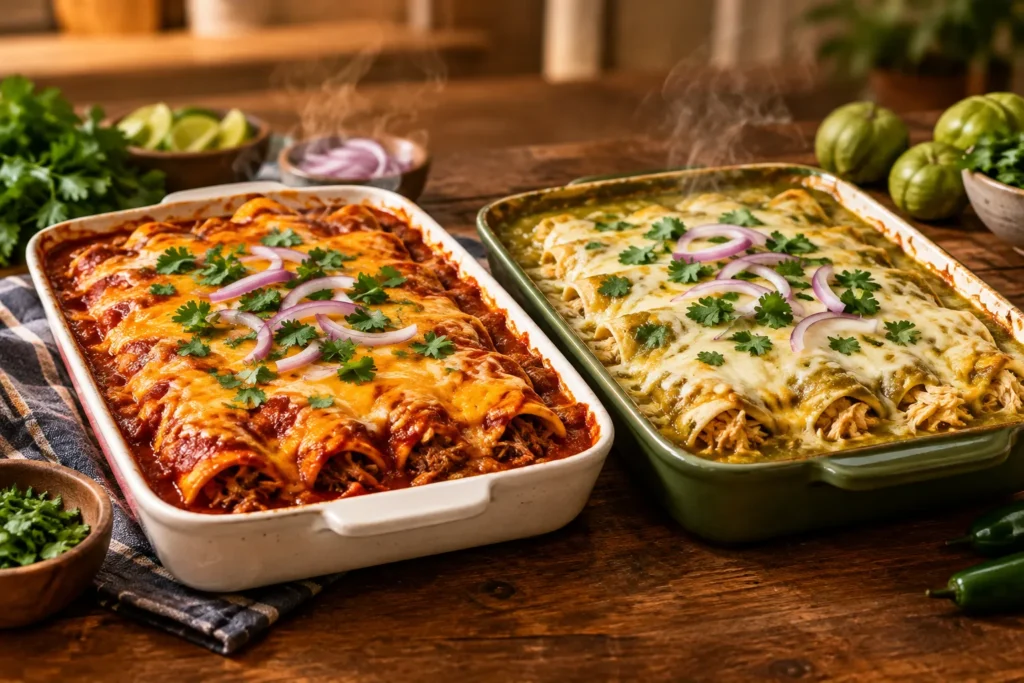
Beef or chicken enchiladas are corn tortillas rolled around seasoned shredded meat, topped with chile-based sauce and melted cheese, then baked until bubbling. Beef versions tend to run richer in fat and sodium, while chicken enchiladas usually deliver more protein per calorie and slightly more fiber. Both bake in 20 to 25 minutes at 375 degrees Fahrenheit and work well for weeknight dinners or meal prep.
Key Takeaways
- Beef enchiladas typically run 500 to 550 calories per serving with higher saturated fat; chicken enchiladas land closer to 530 calories with more protein and fiber.
- Shredded meat holds sauce and rolls better than ground beef, which tends to crumble out of the tortilla.
- Dry enchiladas usually result from skipping the sauce dip or overbaking uncovered.
- Monterey Jack, cheddar, and queso Oaxaca melt the most evenly for topping.
- Beef enchiladas freeze well unbaked for up to three months.
- A mild red sauce or sour cream-based topping works best for kids sensitive to spice.
- Corn tortillas are traditional, but flour tortillas work for a softer, less authentic version.
- Plan on two to three enchiladas per adult serving.
What’s the Difference Between Beef and Chicken Enchiladas
The core difference is the protein and how it affects flavor, texture, and nutrition. Beef enchiladas use shredded or ground beef, often simmered with cumin and chili powder, giving a heavier, richer bite. Chicken enchiladas use shredded poached or rotisserie chicken, producing a lighter, milder filling that pairs naturally with green or creamy sauces.
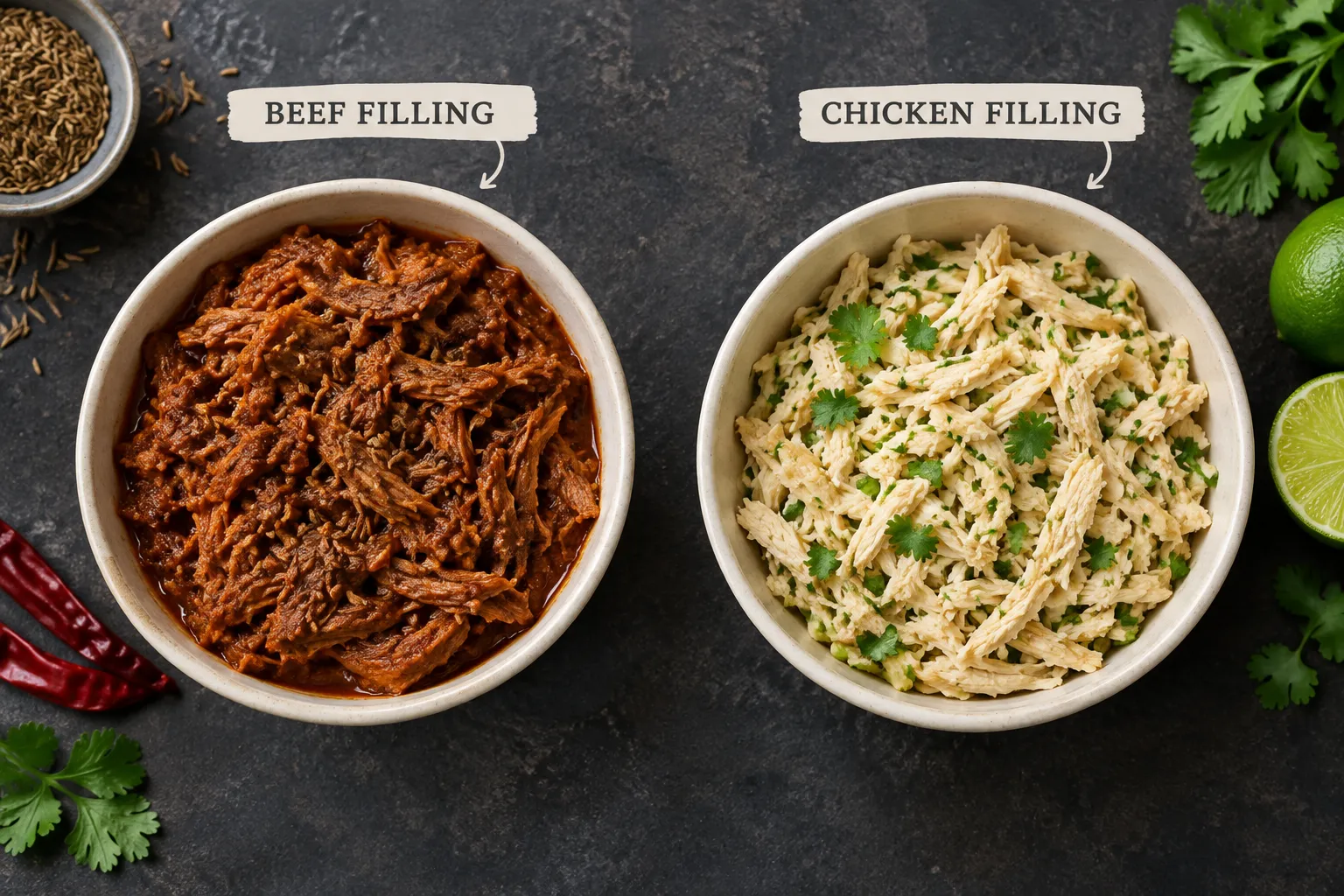
Nutritionally, the gap is measurable. A standard beef enchiladas recipe averages around 552 calories, 33.6 grams of fat, and nearly 1,186 milligrams of sodium per serving. A comparable chicken enchiladas recipe comes in closer to 532 calories, 24 grams of fat, and 836 milligrams of sodium, with notably higher fiber. Choose beef if you want a more savory, satisfying dinner. Choose chicken if you’re watching saturated fat or want a leaner protein base.
Which Tastes Better, Beef or Chicken Enchiladas
Taste preference is subjective, but the two proteins lead to genuinely different flavor profiles rather than one being objectively superior. Beef brings a deeper, fattier, umami-forward taste that stands up well to bold red sauces and chile con carne toppings. Chicken is milder and absorbs sauce flavor more directly, which is why it’s often served with tangy sour cream sauce or green tomatillo salsa.
Many Tex-Mex restaurants solve this debate by offering combination plates. Menus featuring Enchiladas Supremas, for example, pair one beef, one chicken, one cheese, and one bean enchilada on a single plate so diners don’t have to pick a side. If you’re hosting a dinner at home, consider:
- Beef enchiladas with chile con carine or red sauce for guests who like heartier flavors.
- Chicken enchiladas with green tomatillo or sour cream sauce for a lighter option.
- A mixed tray so everyone gets a choice.
Can You Use Ground Beef for Enchiladas or Does It Need to Be Shredded
Ground beef works, but shredded beef rolls and holds together better inside the tortilla. Ground beef tends to crumble and fall out during rolling and baking, especially once sauce softens the tortilla. Shredded beef, usually made from chuck roast or flank steak simmered low and slow, stays intact and distributes more evenly through each bite.
If ground beef is what you have on hand, drain it thoroughly and bind it slightly with a few tablespoons of sauce or a sprinkle of cheese before rolling. This reduces the chance of a soggy, falling-apart enchilada. Choose shredded beef if presentation and texture matter for a dinner party; ground beef is fine for a quick, casual weeknight batch where some filling loss isn’t a dealbreaker.
Why Do My Enchiladas Always Come Out Dry
Dry enchiladas almost always come from two culprits: skipping the sauce-dip step before rolling, or baking too long without enough sauce covering the top. Tortillas that go into the dish without any sauce contact will absorb moisture from the filling instead, leaving the dish tough and dried out at the edges.
To fix this:
- Dip each tortilla briefly in warm sauce before filling and rolling.
- Pour a thin layer of sauce on the bottom of the baking dish before adding rolled enchiladas.
- Cover the top generously with sauce and cheese, not just a drizzle.
- Bake covered with foil for the first 15 minutes, then uncover to let the cheese brown.
Common mistake: using cold, stiff tortillas straight from the fridge. They crack and dry out faster. Warm them on a dry skillet or in the microwave wrapped in a damp towel first.
How Long Do Enchiladas Take to Bake
Enchiladas typically bake for 20 to 25 minutes at 375 degrees Fahrenheit, or until the sauce is bubbling and the cheese is fully melted. Thicker fillings or a fully loaded dish with extra sauce may need closer to 30 minutes.
A simple checklist for doneness:
- Sauce is bubbling at the edges of the dish.
- Cheese has melted completely with light golden spots.
- A fork easily pierces through the rolled tortilla without resistance.
If the dish was assembled cold from the refrigerator, add 5 to 10 extra minutes to the bake time.
What’s the Best Cheese for Enchiladas That Melts Well
Monterey Jack, cheddar, and queso Oaxaca are the top choices because they melt smoothly without becoming greasy or rubbery. Monterey Jack gives a mild, creamy melt that works for both beef and chicken fillings. Cheddar adds sharper flavor and pairs especially well with beef and red chile sauce, as seen on menus that top beef enchiladas with chile con carne and cheddar. Queso Oaxaca, a Mexican string cheese, stretches beautifully and suits more traditional preparations.
Avoid pre-shredded cheese coated in anti-caking starch if possible, since it melts less evenly than cheese shredded fresh from a block.
Can You Freeze Beef Enchiladas Before Cooking Them
Yes, beef enchiladas freeze well unbaked for up to three months when wrapped tightly. Assemble the enchiladas in a freezer-safe dish, cover with sauce, wrap in plastic wrap and then foil, and freeze before baking. This method locks in moisture better than freezing after baking, since reheating from frozen can dry out already-cooked tortillas.
To cook from frozen, bake covered at 375 degrees Fahrenheit for about 45 to 55 minutes, removing the foil for the last 10 minutes to brown the cheese. Thawing overnight in the refrigerator first will shorten total bake time closer to the standard 25 to 30 minutes.
Are Enchiladas Good for Meal Prep
Yes, both beef and chicken enchiladas hold up well for meal prep because the sauce keeps the filling moist over several days of refrigeration. Portion individual enchiladas into airtight containers with a side of rice or beans, and they’ll stay fresh for three to four days in the refrigerator.
Chicken enchiladas are often the better meal-prep choice if you’re tracking protein and fiber, since a typical chicken enchiladas recipe delivers around 32 grams of protein and 8.6 grams of fiber per serving, compared to beef’s roughly 26.6 grams of protein and just 1.5 grams of fiber. Reheat in the microwave for 90 seconds to 2 minutes, or in a 350-degree oven for 10 minutes to preserve texture better than microwaving alone.
How Do I Make Enchiladas Less Spicy for Kids
Use a mild red sauce or a sour cream-based sauce instead of a chile-heavy version, and keep hot ingredients like jalapeños or chili flakes on the side rather than mixed into the filling. Sour cream sauce, which several Tex-Mex restaurants already use for chicken enchiladas, naturally tones down heat while adding creaminess that kids tend to like.
Other adjustments:
- Swap canned green chiles for roasted poblano, which is milder.
- Reduce or omit chili powder in the meat seasoning.
- Serve extra cheese on top to balance any remaining heat.
- Offer a side of sour cream or avocado for dipping.
Should You Dip Tortillas in Sauce Before Rolling Enchiladas
Yes, dipping tortillas briefly in warm sauce before filling and rolling is the standard technique and it prevents dry, cracked enchiladas. The quick dip softens the tortilla so it rolls without tearing and infuses flavor directly into the tortilla itself, not just the topping.
Dip each tortilla for only one to two seconds per side in warm, not boiling, sauce. Oversoaking makes the tortilla fall apart when you try to roll it. If you skip this step entirely, expect tougher, less flavorful tortillas even if the final sauce layer on top looks generous.
What Can I Use Instead of Enchilada Sauce
Canned crushed tomatoes blended with chili powder and cumin, a simple broth-based chili gravy, or a cream-based sauce with green chiles can all substitute for traditional enchilada sauce. Each swap changes the final flavor but keeps the dish structurally the same.
Quick substitute options:
- Tomato-based: crushed tomatoes, chili powder, cumin, garlic, simmered 10 minutes.
- Cream-based: sour cream, green chiles, chicken broth, warmed gently.
- Mole-style: a store-bought mole paste thinned with broth, for a richer, more complex topping, similar to Mole Negro variations seen on specialty restaurant menus.
Can I Make Enchiladas With Flour Tortillas or Just Corn
Corn tortillas are traditional and hold up best to sauce and baking, but flour tortillas can be used for a softer, Tex-Mex-leaning version. Corn tortillas have a firmer structure and a slightly earthy flavor that’s closer to the dish’s Mexican roots. Flour tortillas are softer, blander, and tend to get a bit gummy when soaked in sauce, but many home cooks prefer the texture.
Choose corn if authenticity and texture matter most. Choose flour if you or your family simply prefer a softer bite, or if corn tortillas aren’t readily available.
How Many Enchiladas Should I Make Per Person
Plan on two to three enchiladas per adult, depending on size and what sides you’re serving. A standard serving size used in most recipe nutrition data is one enchilada, which weighs about 140 grams and delivers roughly 267 calories, so two to three per person covers a full dinner portion without being excessive.
For a dinner party or event menu, where enchiladas are paired with rice, beans, or a salad, two per person is usually sufficient. For a standalone meal with minimal sides, three per person is a safer estimate.
What Sides Go Well With Beef or Chicken Enchiladas
Mexican rice, refried beans, guacamole, and pico de gallo are the most common and reliable sides for both beef and chicken enchiladas. These sides round out the plate without competing with the richness of the sauce and cheese.
Simple side pairing guide:
| Side Dish | Works Best With |
|---|---|
| Mexican rice | Both beef and chicken |
| Refried beans | Both, especially beef |
| Guacamole | Chicken, for a cooling contrast |
| Pico de gallo | Both, adds acidity |
| Rajas poblanas | Beef, for smoky depth |
Recipe Card: Beef or Chicken Enchiladas
Recipe Subtitle: Rolled corn tortillas filled with seasoned shredded beef or chicken, baked in chile sauce and melted cheese.
Recipe Description: This recipe delivers classic Tex-Mex enchiladas using either shredded beef or shredded chicken, simmered in warm spices and rolled into corn tortillas. Topped with red or green sauce and a generous layer of melted cheese, it bakes into a bubbling, comforting dinner suited for weeknights or casual entertaining.
Recipe Keywords: beef enchiladas, chicken enchiladas, Tex-Mex dinner, shredded beef recipe, enchilada sauce, baked enchiladas, Mexican comfort food
Difficulty Level: Intermediate
Preparation Time: 30 minutes
Cooking Time: 25 minutes
Rest Time: 5 minutes
Cooking Temperature (Fahrenheit): 375
Calories: approximately 540 per serving (3 enchiladas)
Best Season: Fall and winter, also suited for casual weeknight dinners year-round
Cooking Methods: Simmering, shredding, rolling, baking
Cuisines Suggestions: Tex-Mex, Mexican, Southwestern American
Recipe Badges: High-Protein, Freezer-Friendly, Family-Favorite
Recipe Keys:
- Shredded meat rolls more neatly than ground meat.
- Dipping tortillas in sauce before rolling prevents dryness.
- Monterey Jack or cheddar melts most evenly on top.
Ingredients
- 2 cups shredded cooked beef or chicken
- 12 corn tortillas
- 2 cups red or green enchilada sauce
- 2 cups shredded Monterey Jack or cheddar cheese
- 1/2 cup diced white onion
- 1 teaspoon ground cumin
- 1 teaspoon chili powder
- 2 cloves garlic, minced
- 1 tablespoon vegetable oil
- 1/4 cup chopped cilantro, for garnish
- Sour cream, for serving
Instructions
- Preheat oven to 375 degrees Fahrenheit.
- Heat oil in a skillet and sauté onion and garlic until soft.
- Add shredded beef or chicken, cumin, and chili powder; stir until warmed through.
- Pour a thin layer of enchilada sauce into the bottom of a baking dish.
- Warm tortillas, then dip each briefly in warm sauce.
- Fill each tortilla with the meat mixture and roll tightly, placing seam-down in the dish.
- Pour remaining sauce over the rolled enchiladas.
- Top generously with shredded cheese.
- Cover with foil and bake for 15 minutes.
- Uncover and bake another 10 minutes until cheese is bubbling and golden.
- Let rest 5 minutes, garnish with cilantro, and serve with sour cream.
Equipment
- 9×13-inch baking dish
- Large skillet
- Tongs
- Mixing bowl
- Aluminum foil
Nutrition (per serving, approximately 3 enchiladas)
| Nutrient | Beef Enchiladas | Chicken Enchiladas |
|---|---|---|
| Calories | 552 kcal | 532 kcal |
| Protein | 26.6 g | 32 g |
| Fat | 33.6 g | 24 g |
| Carbohydrates | 35.2 g | 49 g |
Notes
- Shred beef or chicken while still warm for easier handling.
- Let the baking dish rest 5 minutes after baking so the sauce sets slightly before serving.
- Store leftovers in an airtight container for up to four days.
FAQs
Can I make beef or chicken enchiladas ahead of time? Yes, assemble the dish up to a day ahead, cover, and refrigerate before baking. Add 5 to 10 minutes to the bake time if baking cold from the fridge.
Do I need to fry the tortillas before rolling? No, a quick dip in warm sauce is enough to soften corn tortillas for rolling; frying is optional and adds extra fat and calories.
Conclusion
Beef or chicken enchiladas remain a reliable, crowd-pleasing dinner because the format is flexible: swap the protein, the sauce, or the cheese, and the dish still works. Beef brings richness and higher fat content, while chicken offers a leaner, higher-fiber alternative without sacrificing flavor. For your next batch, dip tortillas in sauce before rolling, choose a cheese that melts cleanly, and watch sodium levels if you’re serving the dish regularly. Whether you land on beef, chicken, or a mixed tray for the table, the technique matters more than the protein choice.