
Last updated: November 1, 2026
Quick Answer
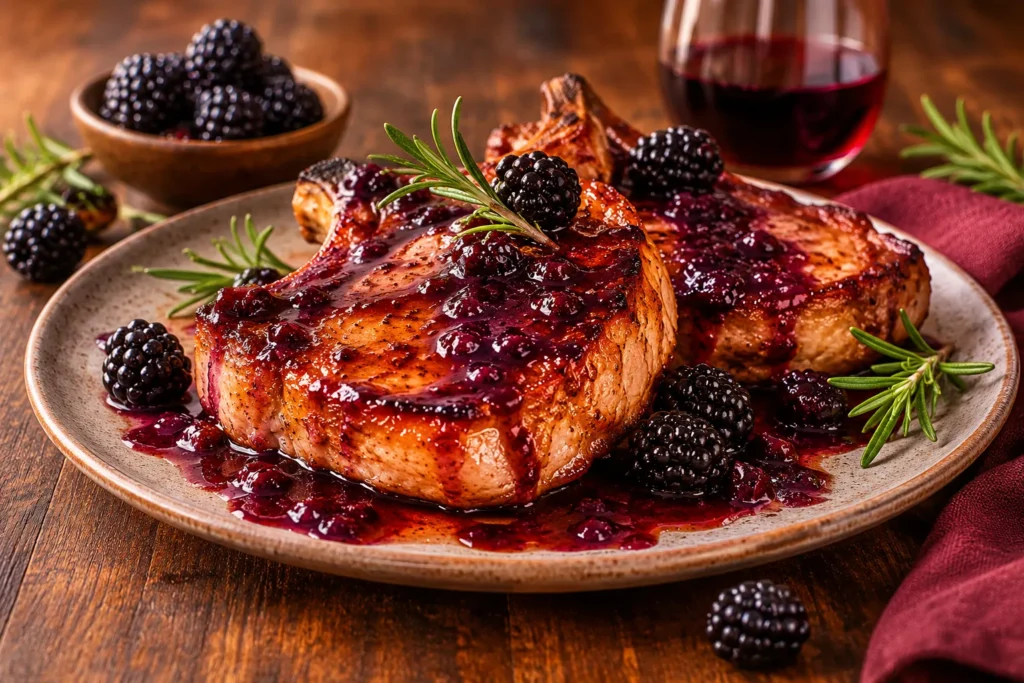
Pork Chops with Blackberry Port Sauce pairs seared bone-in or boneless chops with a reduced sauce made from ruby port wine, fresh or frozen blackberries, stock, and a touch of sweetness. The sauce comes together in the same pan used to cook the chops, taking about 20 to 25 minutes to reduce into a glossy, pourable glaze. This dish works for weeknight dinners and holiday tables alike, and it adapts easily for beef, lamb, or game.
Key Takeaways
- Blackberry port sauce is built from port wine, blackberries, stock, and a sweetener, reduced by roughly half.
- You can substitute dry red wine, grape juice, or balsamic-based liquid for port to make a non-alcoholic version.
- Frozen blackberries work nearly as well as fresh; just add two or three extra minutes of simmer time.
- Bitterness usually comes from over-reduced port tannins or seeds left in the sauce, straining fixes most issues.
- The sauce keeps for about 4 to 5 days refrigerated and can be made up to 2 days ahead.
- A medium-bodied red like Pinot Noir or Zinfandel complements the fruit and tannin profile well.
- The sauce also works on beef tenderloin, lamb chops, and game meats like elk or venison.
What Is Pork Chops with Blackberry Port Sauce
Pork Chops with Blackberry Port Sauce is a savory-sweet main course built on pan-seared pork chops finished with a reduction sauce of port wine, blackberries, and stock. The dish sits at the intersection of French pan-sauce technique and American comfort cooking, borrowing the same deglazing method used in classic bistro cooking.
The appeal is balance. Pork’s mild, slightly sweet fat pairs naturally with tart fruit and the raisin-like depth of port wine. Similar pork-and-fruit sauces have appeared in supermarket recipe collections and chef-driven sites throughout 2026, and the same blackberry-port technique shows up on elk chops, lamb racks, and roast beef, which says something about how versatile the flavor combination really is.
How Do You Make Blackberry Port Sauce From Scratch
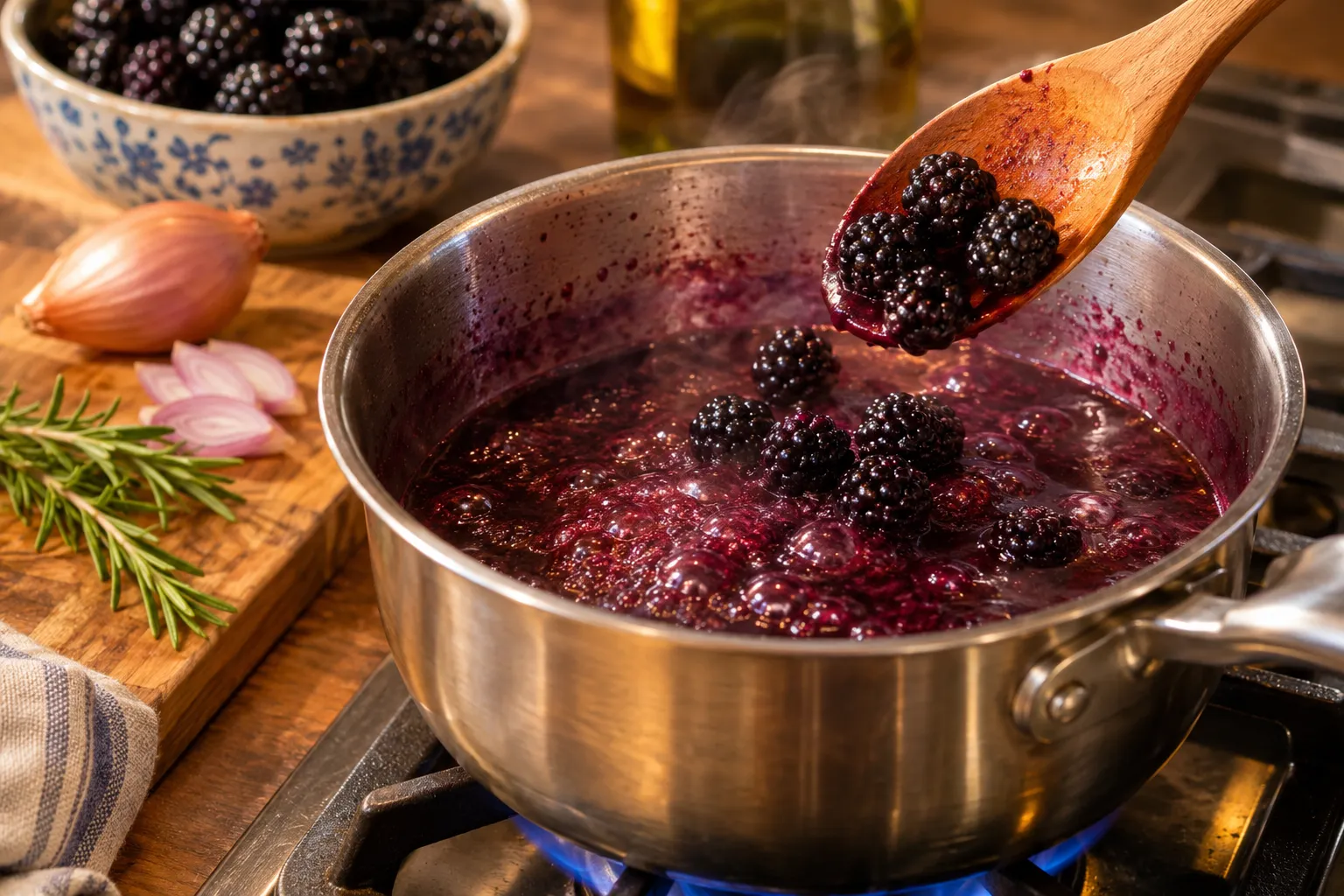
Blackberry port sauce starts with sautéing a shallot in butter, then deglazing with port wine and letting it reduce by about half before adding blackberries, stock, and a small amount of sweetener. The mixture simmers for 10 to 25 minutes depending on the recipe, then gets strained and finished with cold butter for shine.
A reliable home version looks like this:
- Sauté a diced shallot in butter until soft, about 2 minutes.
- Pour in 1 cup of ruby port and simmer until reduced by half.
- Add ½ pint of blackberries, 1 cup of beef or chicken stock, and 1 tablespoon of honey.
- Simmer 20 to 25 minutes until reduced to roughly 1½ cups.
- Strain through a fine-mesh sieve to remove seeds.
- Whisk in 2 tablespoons of cold butter off the heat.
This method mirrors the approach used in Bon Appetit’s pork chops with cranberry-port-rosemary sauce, where broth and port are reduced in the same skillet used to sear the meat, then thickened with fruit instead of a roux.
Can You Make Blackberry Port Sauce Without Alcohol
Yes, a non-alcoholic version replaces the port with a mix of grape juice, a splash of balsamic vinegar, and a little extra sweetener to mimic port’s deep, slightly tannic flavor. The texture and reduction time stay nearly the same.
A workable swap: combine ¾ cup Concord grape juice with 2 tablespoons balsamic vinegar and 1 tablespoon brown sugar. Simmer this blend with the blackberries and stock exactly as you would with port. The flavor will be sweeter and less tannic, so cut back on added sugar elsewhere in the recipe to keep the sauce from tasting syrupy.
What Can I Substitute for Port Wine in This Recipe
If you don’t have port on hand, use a dry red wine like Zinfandel or Merlot combined with a tablespoon of brown sugar, or try Marsala wine, which has a similar sweetness level. Both substitutes need slightly less added sugar than a straight grape-juice replacement.
- Dry red wine + brown sugar: closest flavor match, slightly less sweet than port.
- Marsala wine: naturally sweet, works nearly 1-to-1.
- Madeira: similar nutty sweetness, good alternative for sauces served with pork.
- Grape juice + balsamic vinegar: best non-alcoholic option (see above).
Choose dry red wine plus sugar if you want the closest flavor to the original. Choose grape juice and balsamic if you’re cooking for guests who avoid alcohol entirely.
Why Did My Blackberry Port Sauce Turn Out Bitter
Bitterness in blackberry port sauce almost always comes from one of two things: over-reducing the port so its tannins concentrate too much, or leaving blackberry seeds in the final sauce. Unstrained seeds carry a sharp, slightly bitter edge that straining removes completely.
Common mistakes and fixes:
- Mistake: Reducing port on high heat without watching it closely. Fix: Reduce over medium heat and taste as you go; pull it before it tastes sharp.
- Mistake: Skipping the strain step. Fix: Always push the sauce through a fine-mesh sieve before serving.
- Mistake: Not balancing with sweetness. Fix: Add honey or sugar in small increments, tasting after each addition.
Edge case: if your port was already an inexpensive, highly tannic bottle, no amount of straining will fully fix bitterness, swap to a mid-range ruby or tawny port next time.
Can I Use Frozen Blackberries Instead of Fresh
Frozen blackberries work well in this sauce and are a practical choice outside peak summer season. Add them directly from frozen; they release slightly more liquid than fresh berries, so extend the simmer time by 2 to 3 minutes to reach the same consistency.
Choose fresh blackberries if you’re serving the dish in peak summer months when they’re at their sweetest and least seedy. Choose frozen if you’re cooking in winter or need convenience, the flavor difference is minor once the berries are cooked down and strained.
How Long Does Blackberry Port Sauce Last in the Fridge
Blackberry port sauce keeps for about 4 to 5 days in an airtight container in the refrigerator. Reheat gently over low heat, whisking in a small splash of stock or water if the sauce has thickened too much.
For longer storage, freeze the sauce in a sealed container for up to 2 months. Thaw it overnight in the fridge before reheating slowly on the stovetop.
Can I Make the Sauce Ahead of Time
Yes, this sauce is well suited to making ahead, since the flavors deepen slightly after a day in the refrigerator. Prepare it up to 2 days in advance, then reheat gently while the pork chops sear, and finish with the cold butter swirl just before serving for the best shine and mouthfeel.
What Wine Pairs Best with Pork Chops and Blackberry Sauce
A medium-bodied red wine such as Pinot Noir, Zinfandel, or a light Syrah pairs best with Pork Chops with Blackberry Port Sauce. These wines echo the dish’s fruit notes without competing with the port’s sweetness.
Avoid very tannic, full-bodied reds like Cabernet Sauvignon, which can clash with the sauce’s sweetness and make both the wine and the dish taste harsher than intended.
Does Blackberry Port Sauce Work with Beef Instead
Yes, blackberry port sauce pairs naturally with beef, particularly tenderloin or roast cuts. Several current recipes build nearly identical sauces for roast beef, using the same port-stock-blackberry reduction with the pan drippings from the beef standing in for the pork fond.
If you’re deciding between proteins, pork chops cook faster and absorb the sauce’s sweetness more readily, while beef tenderloin offers a richer, more savory base that mellows the sauce’s fruitiness. For a related preparation, see this easy pork roast recipe, which uses a similar pan-sauce approach.
Can I Use Blackberry Jam Instead of Fresh Berries
Blackberry jam can replace fresh or frozen berries in a pinch, though the sauce will taste sweeter and less bright. Use about ⅓ cup of jam in place of ½ pint of berries, and cut back on added sugar or honey to compensate.
Because jam is already thickened with pectin, reduce the simmer time slightly and whisk frequently to avoid a gummy texture. This shortcut works best for a quick weeknight version rather than a dinner-party presentation.
Is Blackberry Port Sauce Gluten Free
Yes, a basic blackberry port sauce made from port wine, blackberries, stock, shallots, and butter is naturally gluten free. Always confirm that your stock or broth brand doesn’t include wheat-based thickeners or flavorings, since some commercial broths add gluten-containing ingredients.
What Are the Best Side Dishes to Serve with This
Creamy mashed potatoes, roasted root vegetables, and a light green salad all pair well with Pork Chops with Blackberry Port Sauce because they balance the sauce’s sweetness with starch, earthiness, or acidity.
- Starchy base: mashed potatoes or wild rice pilaf to soak up extra sauce.
- Vegetable: roasted Brussels sprouts or green beans for contrast.
- Salad: a sharp, acidic option like this plum tomato and escarole salad with Parmesan balsamic cuts through the richness nicely.
How Much Port Wine Do I Actually Need
Most home recipes for Pork Chops with Blackberry Port Sauce call for 1 cup of port wine per 4 servings, though some professional versions use up to 2 cups when the sauce is meant to reduce further for a thicker jus. Scale the port proportionally if you’re doubling the recipe, but don’t exceed roughly ¼ cup of port per chop to keep the sauce from tasting boozy.
Is This Sauce Good for People Who Don’t Like Sweet Food
Blackberry port sauce can be adjusted for a less sweet profile by reducing or omitting the added honey or sugar and leaning more on the natural tartness of the blackberries and a splash of balsamic vinegar. This keeps the sauce savory-forward rather than dessert-like.
Choose this adjustment if you’re serving guests who prefer savory jus-style sauces over fruit glazes. The port’s natural dryness (especially a dry white or ruby port rather than a sweeter tawny) also helps keep the final flavor more restrained.
Recipe Details
Recipe Subtitle: Seared pork chops finished with a rich, reduced blackberry and port wine sauce.
Recipe Description: This recipe pairs pan-seared pork chops with a glossy sauce made from ruby port, fresh blackberries, and shallots, reduced until thick and finished with butter. It’s an elegant dinner option that works equally well for a weeknight meal or a dinner party centerpiece.
Recipe Keywords: pork chops with blackberry port sauce, blackberry port sauce recipe, pan-seared pork chops, port wine sauce for pork, fruit sauce for pork chops, blackberry glaze pork
Difficulty Level: Intermediate
Preparation Time: 15 minutes
Cooking Time: 30 minutes
Rest Time: 5 minutes
Cooking Temperature (Fahrenheit): 145°F internal temperature for pork
Calories: Approximately 420 per serving (estimate)
Best Season: Fall and winter, also suitable for holiday entertaining
Cooking Methods: Pan-searing, deglazing, reducing, finishing with butter
Cuisines Suggestions: American, French-inspired, contemporary bistro
Recipe Badges: Gluten-Free, High-Protein, Date-Night Dinner
Recipe Keys:
- The sauce is built in the same pan as the pork for maximum flavor.
- Straining removes seeds and smooths out any bitterness.
- Butter finishing adds gloss and rounds out the sauce’s tartness.
Ingredients
- 4 bone-in pork chops (about 1 inch thick)
- Salt and black pepper, to taste
- 2 tablespoons olive oil
- 1 shallot, diced
- 1 cup ruby port wine
- ½ pint fresh or frozen blackberries
- 1 cup beef or chicken stock
- 1 tablespoon honey
- 2 tablespoons cold butter, cubed
- 1 sprig fresh rosemary (optional)
Instructions
- Season pork chops with salt and pepper.
- Heat olive oil in a heavy skillet over medium-high heat.
- Sear chops 4 to 5 minutes per side until internal temperature reaches 145°F. Remove and rest.
- Add shallot to the same pan; sauté 1 to 2 minutes.
- Deglaze with port wine, scraping up browned bits.
- Simmer port until reduced by half, about 5 minutes.
- Add blackberries, stock, honey, and rosemary.
- Simmer 15 to 20 minutes until reduced to roughly 1½ cups.
- Strain sauce through a fine-mesh sieve.
- Whisk in cold butter off heat until glossy.
- Spoon sauce over rested pork chops and serve.
Equipment
- Heavy-bottomed skillet or cast-iron pan
- Fine-mesh sieve
- Meat thermometer
- Wooden spoon
- Small saucepan (optional, for reheating)
Nutrition
| Nutrient | Per Serving (estimate) |
|---|---|
| Calories | 420 kcal |
| Protein | 32 g |
| Fat | 22 g |
| Carbohydrates | 18 g |
Notes
- Rest the pork chops for at least 5 minutes before saucing to keep juices in the meat.
- If the sauce seizes or breaks, whisk in a teaspoon of warm water off heat to re-emulsify.
- For a thicker glaze, reduce the sauce an extra 2 to 3 minutes after straining.
FAQs
Can I use boneless pork chops instead of bone-in? Yes, boneless chops work fine; reduce searing time by 1 to 2 minutes per side since they cook faster and can dry out more easily.
What’s the best way to reheat leftover pork chops with sauce? Reheat gently in a covered skillet over low heat with a splash of stock, keeping the sauce from breaking or the pork from drying out.
Conclusion
Pork Chops with Blackberry Port Sauce rewards a little patience in the pan but doesn’t demand advanced technique. Sear the chops well, build the sauce in the same skillet, reduce it with attention rather than high heat, and strain before finishing with butter. For related pork dishes to round out your recipe collection, try stuffed pork chops or Thai pork satay for a different flavor direction. Start with the base recipe above, then adjust sweetness, wine choice, or berry form to fit your table.