Last updated: October 18, 2026
Quick Answer
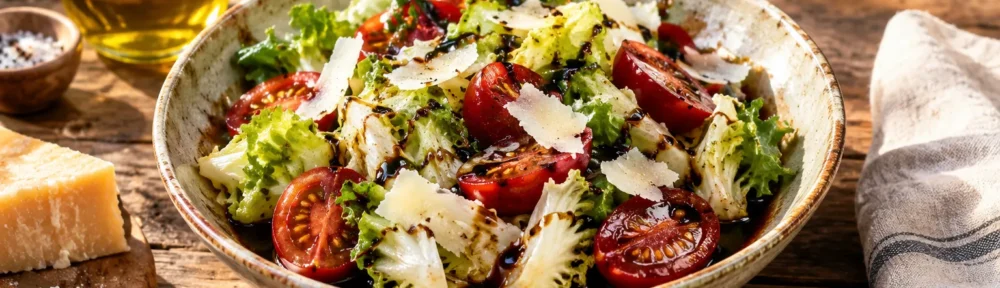
Plum Tomato and Escarole Salad with Parmesan Balsamic pairs bitter, sturdy escarole leaves with juicy plum tomatoes, shaved Parmesan, and a sharp balsamic vinaigrette. It works as a quick weeknight side for pasta, soup, or grilled protein, takes about 20 minutes start to finish, and needs no cooking beyond whisking a dressing. It is naturally vegetarian, gluten-free, and easy to adapt for vegan diets.
Key Takeaways
- Escarole’s mild bitterness balances the acidity of balsamic vinegar and the sweetness of ripe plum tomatoes, a pairing documented in Italian-style salad collections for years.
- Plum tomatoes (also called Roma tomatoes) hold their shape and have less watery seed gel than beefsteak or slicing varieties, which keeps the salad from turning soggy.
- A basic Parmesan balsamic vinaigrette needs only balsamic vinegar, olive oil, Dijon mustard, garlic, salt, pepper, and grated Parmesan.
- The salad is best assembled fresh but the dressing and prepped vegetables can be stored separately up to three days ahead.
- Arugula is peppery and tender; escarole is mildly bitter and crisp, so the two greens are not interchangeable in texture or flavor.
- Romaine hearts, curly endive, or baby chicory are the closest substitutes if escarole is unavailable.
- This dish is good for light meal prep when stored unassembled, but it is not ideal as a fully dressed leftover.
- The core flavor profile has stayed consistent in Italian-American kitchens: bitter greens, acid, salty cheese.
Recipe at a Glance
| Field | Detail |
|---|---|
| Recipe Subtitle | A crisp Italian side salad built on bitter escarole, ripe plum tomatoes, and a salty Parmesan balsamic dressing |
| Recipe Description | This salad layers torn escarole leaves with sliced plum tomatoes, finishes with shaved Parmesan, and gets tossed in a quick balsamic vinaigrette. It is light enough to serve alongside heavy pasta dishes or hearty soups and comes together without a stove. |
| Recipe Keywords | plum tomato escarole salad, Parmesan balsamic dressing, Italian side salad, bitter greens salad, escarole recipe, no-cook salad |
| Difficulty Level | Easy |
| Preparation Time | 15 minutes |
| Cooking Time | 0 minutes |
| Rest Time | 5 minutes (dressing rest) |
| Cooking Temperature | Not applicable (no-cook recipe) |
| Calories | Approximately 180 per serving (estimate, based on standard ingredient quantities below) |
| Best Season | Late summer into early fall, when plum tomatoes peak, though escarole is available most of the year |
| Cooking Methods | No-cook, whisking, tossing, hand-tearing |
| Cuisines Suggestions | Italian, Italian-American, Mediterranean |
| Recipe Badges | Vegetarian, Gluten-Free, No-Cook |
| Recipe Keys | Use dry, well-chilled escarole for crunch; slice plum tomatoes just before tossing to avoid sogginess; dress the salad right before serving, never in advance |
What Is Escarole and How Do You Prepare It for Salad
Escarole is a broad-leafed variety of endive with pale green, slightly curled leaves and a mild, nutty bitterness that softens once dressed. To prepare it for salad, wash the head thoroughly, tear the leaves into bite-size pieces, and dry them completely before tossing with dressing.
Escarole grows in loose, sturdy heads that trap dirt near the base, so a thorough rinse matters more than with pre-washed greens. The preparation process has three practical steps:
- Trim and separate. Cut off the root end and separate the leaves.
- Wash twice. Submerge leaves in a large bowl of cold water, swish, lift out, and repeat with fresh water to remove grit.
- Dry fully. Spin or pat dry. Wet escarole dilutes the Parmesan balsamic dressing and makes the salad taste flat.
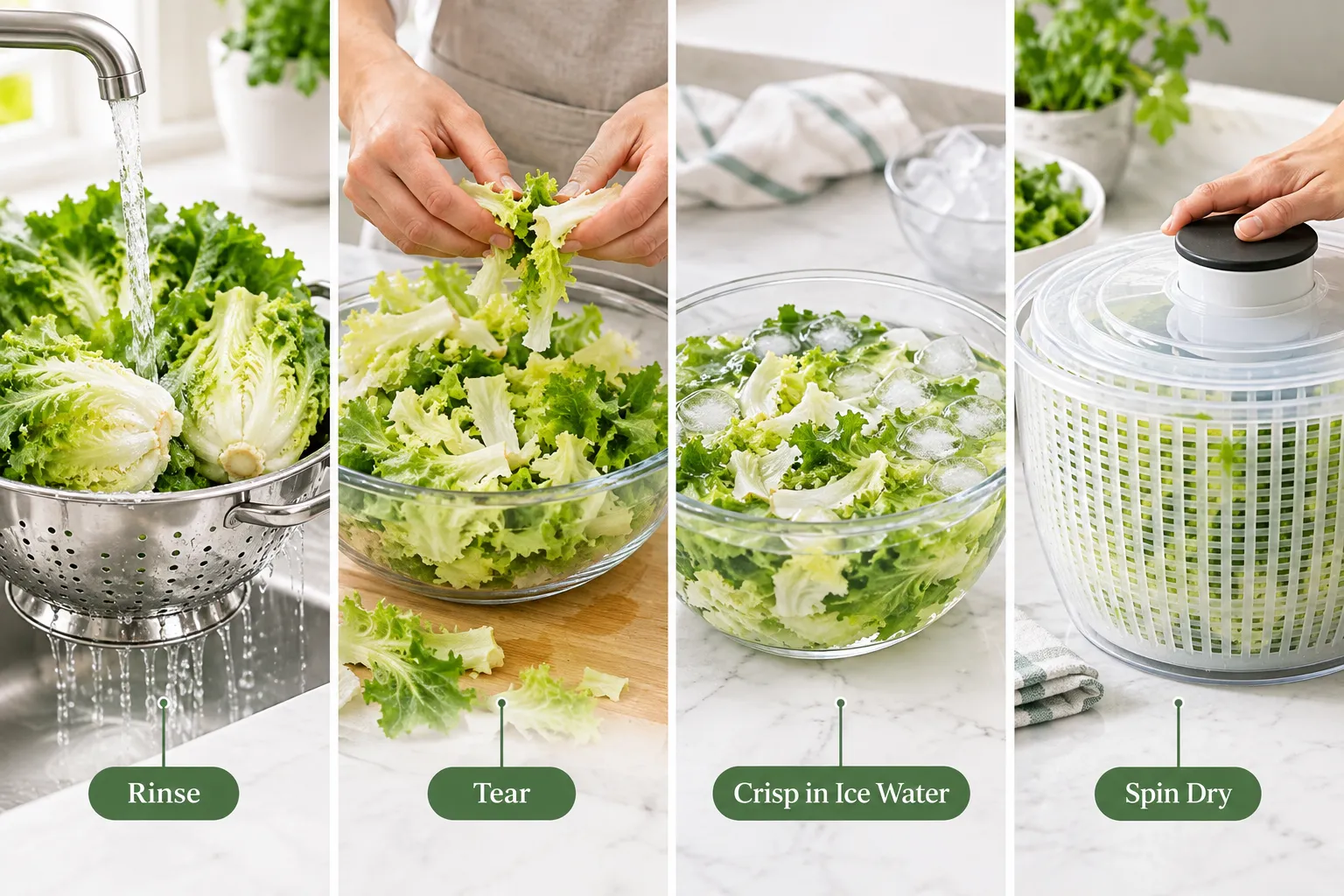
A common mistake is skipping the drying step. Damp leaves hold water on their surface, which waters down the vinaigrette and leaves the salad swimming instead of lightly coated.
Best Plum Tomatoes for Salad Recipes
The best plum tomatoes for this salad are firm, deep-red, and heavy for their size, with minimal give when gently squeezed. Plum tomatoes (often sold as Roma tomatoes) have thicker flesh and fewer watery seed cavities than round slicing tomatoes, which keeps the salad crisp rather than soupy.
Look for these traits at the market or grocery store:
- Color: uniform deep red, no green shoulders
- Firmness: slight give, not mushy
- Weight: feels dense for its size, a sign of good flesh-to-seed ratio
- Skin: smooth, unblemished, free of cracks
Can you use regular tomatoes instead of plum tomatoes? Yes, but expect a wetter salad. Round slicing tomatoes and beefsteak varieties carry more seed gel and juice, which can thin out the Parmesan balsamic dressing. If substituting, seed the tomatoes first and pat the slices dry on paper towels before adding them to the bowl. Cherry or grape tomatoes, halved, also work well and are a common swap seen in similar escarole salads served with cherry tomatoes, Parmesan, and a citrus or balsamic vinaigrette.
How to Make Parmesan Balsamic Vinaigrette
A Parmesan balsamic vinaigrette is built on a 3-to-1 ratio of olive oil to balsamic vinegar, sharpened with Dijon mustard and garlic, and finished with grated Parmesan whisked directly into the dressing. This method mirrors the technique used in several documented escarole salad recipes that pair wine vinegar or balsamic with mustard, garlic, and cheese.
Basic ratio:
| Ingredient | Amount |
|---|---|
| Extra-virgin olive oil | 6 tablespoons |
| Balsamic vinegar | 2 tablespoons |
| Dijon mustard | 1 teaspoon |
| Garlic, minced | 1 small clove |
| Grated Parmesan | 2 tablespoons |
| Salt and black pepper | To taste |
Whisk the vinegar, mustard, garlic, salt, and pepper together first, then stream in the olive oil while whisking continuously to emulsify. Stir in the Parmesan last so it does not clump. Let the dressing rest five minutes before tossing so the garlic flavor mellows slightly.
How much Parmesan cheese should you use? For the dressing itself, two tablespoons of finely grated Parmesan is enough to add salt and body without overpowering the balsamic. For garnish on top of the finished salad, plan on an additional two to three tablespoons of shaved or shredded Parmesan per four servings, adjusted to taste.
Plum Tomato and Escarole Salad with Parmesan Balsamic: Easy Recipe
This Plum Tomato and Escarole Salad with Parmesan Balsamic recipe serves four people in about 20 minutes using one head of escarole, a few plum tomatoes, and a quick homemade dressing. It requires no cooking equipment beyond a knife, bowl, and whisk.
Ingredients
- 1 large head escarole, washed and torn
- 3 medium plum tomatoes, sliced or wedged
- 1/4 cup shaved or shredded Parmesan cheese
- 6 tablespoons extra-virgin olive oil
- 2 tablespoons balsamic vinegar
- 1 teaspoon Dijon mustard
- 1 small garlic clove, minced
- Salt and freshly cracked black pepper, to taste
Instructions
- Wash and dry the escarole thoroughly, then tear into bite-size pieces.
- Slice the plum tomatoes into wedges or rounds and set aside.
- In a small bowl, whisk balsamic vinegar, mustard, garlic, salt, and pepper.
- Slowly whisk in the olive oil until the dressing emulsifies.
- Stir two tablespoons of grated Parmesan into the dressing.
- Place the escarole in a large salad bowl.
- Add the tomato wedges on top.
- Drizzle the dressing over the salad and toss gently.
- Garnish with the remaining Parmesan.
- Serve immediately.
Equipment
- Large salad bowl
- Salad spinner or colander
- Whisk
- Small mixing bowl
- Sharp paring knife
Can You Make This Salad Ahead of Time
Yes, the components can be prepped ahead, but the salad itself should be tossed just before serving. Escarole stays crisp longer when stored dry and undressed, and tomatoes release liquid once cut, so holding everything separately preserves texture.
Practical prep-ahead plan:
- Dressing: Store in a sealed jar in the refrigerator up to 5 days; shake or re-whisk before use.
- Escarole: Wash, dry, and refrigerate in a bag with a paper towel up to 2 days.
- Tomatoes: Slice no more than a few hours before serving to limit moisture loss.
How long does this salad stay fresh in the fridge? Once fully dressed and tossed, the salad is best eaten within an hour. Beyond that, the escarole wilts and the tomatoes weep liquid into the bowl, softening the overall texture within 24 hours.
Is this salad good for meal prep? It is good for partial meal prep. Store washed escarole, sliced tomatoes, and dressing in separate airtight containers for up to 3 days, then combine portions fresh at mealtime. Fully assembled and dressed, it does not hold up well as a make-ahead lunch.
Escarole vs Arugula: What’s the Difference
Escarole and arugula are both salad greens, but they differ sharply in texture, flavor, and how they behave once dressed. Escarole has broad, slightly curled, sturdy leaves with a mild bitterness, while arugula has thin, deeply lobed leaves with a peppery, mustard-like bite.
| Trait | Escarole | Arugula |
|---|---|---|
| Texture | Crisp, substantial | Tender, delicate |
| Flavor | Mildly bitter, nutty | Peppery, sharp |
| Best dressing pairing | Balsamic, lemon, mustard-based | Lemon, light vinaigrette |
| Holds up to heavy dressing | Yes | Less so, wilts faster |
Choose escarole if the recipe calls for a green that can carry a robust, acidic dressing without wilting immediately. Choose arugula if the dish needs a peppery bite with a more delicate bite.
Best substitutes for escarole in salad: Romaine hearts, Belgian endive, curly endive (frisée), or baby chicory all offer a similar crunch and mild bitterness. Among these, curly endive is the closest match in flavor profile.
What Pairs Well With Plum Tomato and Escarole Salad
Plum Tomato and Escarole Salad with Parmesan Balsamic pairs best with heavier Italian mains, including baked pasta dishes, risotto, and savory soups like minestrone or Italian wedding soup. The salad’s acidity and bitterness cut through richer, cheese-heavy or creamy dishes.
Strong pairing options include:
- Baked ziti, lasagna, or other cheese-forward pasta bakes
- Grilled chicken, pork chops, or white fish
- Crusty Italian bread for mopping up extra dressing
- Minestrone or Italian wedding soup as a starter course
Is This Salad Vegan or Can You Make It Vegan
This salad, as written, is vegetarian but not vegan because Parmesan cheese contains animal rennet in most traditional production. A vegan version is simple to make by swapping Parmesan for a plant-based hard cheese alternative or nutritional yeast.
To make it vegan:
- Replace Parmesan in the dressing and garnish with a vegan Parmesan substitute or 1 to 2 teaspoons of nutritional yeast for a similar savory, salty note.
- Confirm the Dijon mustard and balsamic vinegar brands do not contain honey or animal-derived additives (most do not, but labels vary).
Nutrition
| Nutrient | Amount per serving (estimate) |
|---|---|
| Calories | 180 |
| Protein | 4 g |
| Fat | 16 g |
| Carbohydrates | 6 g |
These figures are estimates based on standard serving sizes for the ingredient list above and will vary depending on the exact brand of olive oil and Parmesan used.
Notes
- Dress the salad only right before serving; escarole wilts faster than romaine once coated in an acidic vinaigrette.
- For extra crunch, soak torn escarole in ice water for 10 minutes before drying, a trick borrowed from restaurant kitchens that serve escarole salads with cherry tomatoes, red onion, and lemon vinaigrette.
- Taste the dressing before tossing; balsamic brands vary widely in sweetness, so adjust the vinegar-to-oil ratio if the dressing tastes too sharp or too mild.
FAQs
Is Plum Tomato and Escarole Salad with Parmesan Balsamic served warm or cold? It is served cold or at room temperature. The dish requires no cooking, so all ingredients are prepared raw and tossed together just before serving.
Can I use bottled balsamic vinaigrette instead of making my own? Yes, a bottled balsamic vinaigrette works as a shortcut, though a homemade version made with fresh garlic, mustard, and grated Parmesan typically delivers a more rounded, less sugary flavor than most bottled dressings.
Why does my escarole taste too bitter? Escarole’s bitterness mellows with a balanced, slightly sweet dressing and a generous amount of Parmesan. If the bitterness is still too strong, mix in a few milder leaves like romaine to soften the overall flavor.
Do I need to remove the tomato seeds before adding them to the salad? Removing seeds is optional for plum tomatoes since they contain less gel than round tomatoes, but seeding is recommended if substituting with juicier tomato varieties to prevent a watery salad.
How many servings does this recipe make? The recipe above makes four side-salad servings, though quantities scale easily by doubling the escarole, tomatoes, and dressing proportionally.
Conclusion
Plum Tomato and Escarole Salad with Parmesan Balsamic earns its place on an Italian table because it does one job well: it cuts through rich pasta, soup, and grilled meats with bitterness, acid, and salt. Start with firm plum tomatoes and well-dried escarole, whisk a simple balsamic vinaigrette with Parmesan, and toss everything together right before the first bite. Keep the components separate if prepping ahead, dress it fresh, and pair it with a hearty main for the fullest effect. The next step is straightforward: pick up a head of escarole and a few plum tomatoes on the next grocery run and build the salad tonight.
plum tomato escarole salad, Parmesan balsamic dressing, escarole recipes, Italian side salad, balsamic vinaigrette, bitter greens salad, no-cook salad recipes, Roma tomato recipes, vegetarian salad, meal prep salads, Italian-American cuisine, salad dressing guide