
Last updated: October 30, 2026
Quick Answer
Finnish butter cookies are a family of short, crumbly, cardamom-scented cookies built on a high butter-to-flour ratio, most commonly known by two names: Finska Pinnar (finger-shaped, pearl-sugar-topped cookies) and Lusikkaleivät (spoon cookies, often jam-filled). They differ from standard shortbread through the use of cardamom, a slightly higher butter content, and distinctive shaping techniques. Home bakers can make them with pantry staples in under an hour, and the dough freezes well for up to three months.
Key Takeaways
- Finnish butter cookies go by several names, most notably Finska Pinnar and Lusikkaleivät.
- The signature flavor comes from browned butter, cardamom, and sometimes vanilla sugar, not vanilla extract alone.
- They are crumblier and more fragrant than classic Scottish shortbread because of a higher butter ratio and spice.
- Chilling the dough before baking is the single biggest factor in preventing spreading.
- Standard recipes are not gluten-free, but almond flour or 1:1 gluten-free blends work with minor texture tradeoffs.
- Dough logs freeze well for up to three months; baked cookies stay fresh about one week at room temperature.
- Cookies and crackers remain a top revenue category in Finland’s snack market, according to 2024 industry data reported in 2025 and 2026.
What Are Finnish Butter Cookies Called
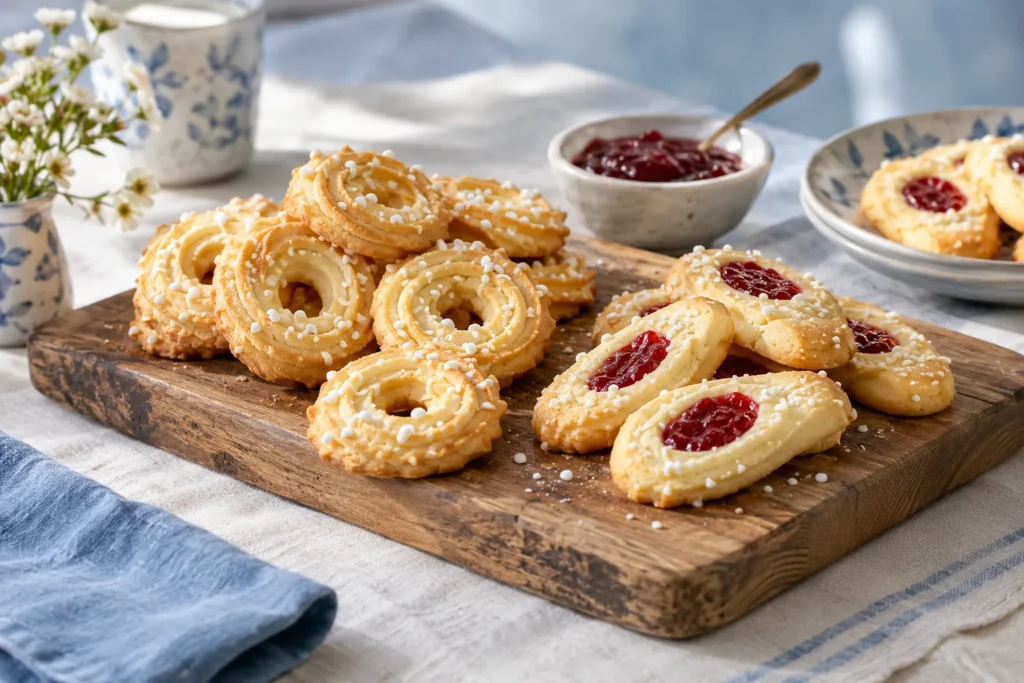
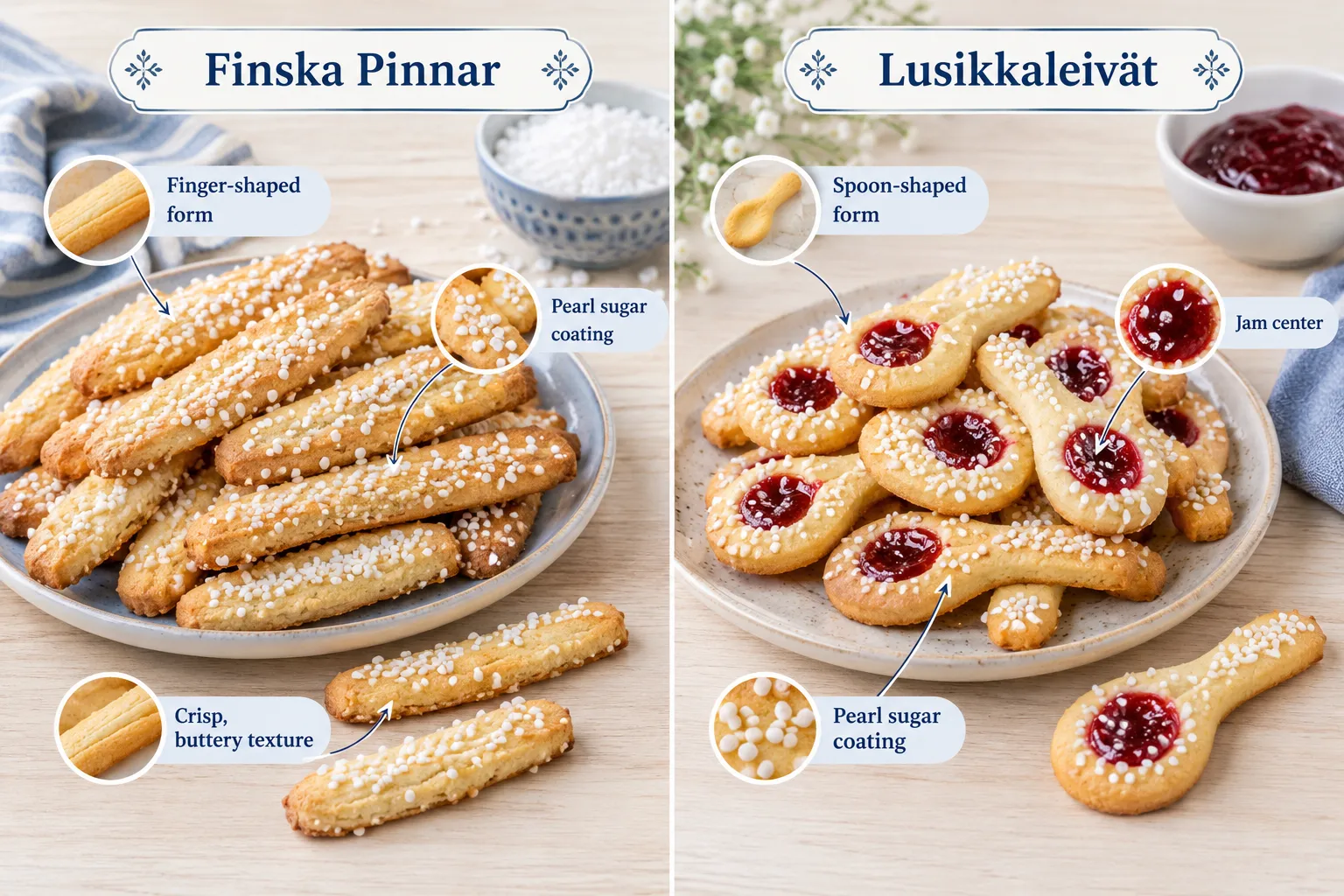
Finnish butter cookies are most commonly called Finska Pinnar or Lusikkaleivät, depending on shape and filling. Both names describe traditional Finnish baked goods built on butter, sugar, flour, and often cardamom.
Finska Pinnar translates loosely to “Finnish sticks” and refers to finger-length cookies brushed with egg wash and topped with pearl sugar or chopped almonds before baking. Lusikkaleivät means “spoon cookies,” a reference to the dough being shaped with a spoon into a hollow that later holds jam, traditionally lingonberry or raspberry. Both fall under the broader category of Scandinavian butter cookies, alongside Swedish drömmar and Danish vaniljekranse. In 2026, Lusikkaleivät in particular has seen renewed recipe attention online, likely tied to broader interest in Nordic baking traditions documented on Finland’s official country information portal.
How Do You Make Authentic Finnish Butter Cookies
Authentic Finnish butter cookies rely on a simple ratio: roughly two parts flour to one part butter, lightly sweetened, and flavored with ground cardamom. The dough is chilled, shaped by hand or piped, and baked at moderate heat until the edges just turn golden.
Here is the general method used across most traditional versions:
- Cream softened (or browned) butter with sugar until light.
- Add an egg yolk and vanilla sugar, mixing just until combined.
- Fold in flour, cardamom, and a pinch of salt without overworking the dough.
- Chill the dough for at least 30 minutes.
- Shape into fingers, rounds, or spoon-pressed wells.
- Brush with egg wash and top with pearl sugar or almonds, or fill with jam after baking.
- Bake at 350°F for 10 to 12 minutes, until edges are lightly golden.
- Cool completely on a wire rack before storing.
For readers who want a full working recipe, we cover ingredients, instructions, and nutrition in detail later in this article.
What’s the Difference Between Finnish Butter Cookies and Shortbread
Finnish butter cookies differ from classic Scottish shortbread mainly in spice, texture, and shape. Shortbread uses only butter, sugar, and flour in a roughly 3:2:1 ratio and bakes into dense, firm wedges, while Finnish butter cookies add cardamom, sometimes an egg yolk, and are shaped into fingers or spoon-pressed rounds that bake up lighter and more crumbly.
Key distinctions:
- Texture: Finnish cookies crumble more readily thanks to a slightly higher butter proportion and the addition of egg yolk in many recipes.
- Flavor: Cardamom is central to Finnish versions; shortbread is typically unflavored beyond butter and vanilla.
- Shape: Finska Pinnar are finger-shaped with pearl sugar; shortbread is usually cut into wedges or rounds.
- Sweetness: Finnish versions are often slightly less sweet, intended to pair with jam or afternoon coffee.
Choose shortbread if you want a firmer, longer-lasting cookie for dunking in tea. Choose Finnish butter cookies if you want a lighter, spiced cookie built for coffee culture and holiday trays.
Where Can I Buy Finnish Butter Cookies Online
Finnish butter cookies are available through specialty Scandinavian food retailers, some Nordic bakeries with e-commerce shops, and international grocery sites that stock European imports. Availability through major US grocery chains remains limited, which is one reason home baking stays the most reliable route.
As of 2026, there has been no major new branded product launch in this category reported by industry trackers; interest continues to center on home baking and recipe content rather than packaged retail expansion. If buying online, look for sellers explicitly labeling cardamom content and shelf life, since imported shortbread-style cookies are sometimes mislabeled as “Finnish” without the signature spice.
How Much Do Finnish Butter Cookies Cost
A homemade batch of roughly 24 Finnish butter cookies typically costs between four and seven dollars in basic ingredients (butter, flour, sugar, egg, cardamom), depending on local butter prices. Specialty imported tins from Scandinavian retailers generally run higher per cookie than home baking, reflecting shipping and packaging costs.
Cookies and crackers remain one of the top revenue-generating categories within Finland’s domestic snack market, based on 2024 data reported through 2025 and 2026, which signals continued consumer demand for this cookie style within its home market even as global retail presence stays modest.
Why Are My Finnish Butter Cookies Spreading Too Much
Spreading usually comes from dough that is too warm, butter that is too soft, or skipping the chill step entirely. Finnish butter cookies rely on firm, cold dough to hold their shape during the first few minutes of baking.
Common fixes:
- Chill the shaped dough for at least 30 minutes, longer in warm kitchens.
- Use cold butter straight from the fridge if your recipe calls for it, rather than fully softened butter.
- Avoid overcreaming the butter and sugar, which incorporates excess air and weakens structure.
- Check oven temperature with a thermometer; an oven running cool causes slower setting and more spread.
Decision rule: if cookies spread even after chilling, reduce butter slightly or add one extra tablespoon of flour to firm the dough.
Common Mistakes When Baking Finnish Butter Cookies
The most common mistakes are skipping the chill step, overbaking until the cookies brown fully, and using pre-ground cardamom that has lost potency. Finnish butter cookies should come out pale gold at the edges, not deeply browned, since overbaking dries out their delicate crumb.
Other frequent errors include overworking the dough after adding flour, which builds gluten and toughens the texture, and using table sugar instead of vanilla sugar, which changes the flavor profile noticeably. For readers who enjoy spiced holiday baking, the Frosted Molasses Ginger Sandwich Cookies and Basic Gingersnap Cookies use a similar chill-and-shape technique worth comparing.
Can You Make Finnish Butter Cookies Without Cardamom
Yes, Finnish butter cookies can be made without cardamom, though the flavor shifts toward a generic butter cookie closer to shortbread. Cardamom is traditional but not structurally necessary to the recipe.
Reasonable substitutes include a small amount of ground cinnamon, a touch of orange zest, or simply vanilla sugar on its own. Bakers who prefer a milder profile might look at Dawn’s Sugar Cookies or The Easiest, Yummiest Sugar Cookies EVER!!! for a comparable unspiced butter cookie base.
Are Finnish Butter Cookies Gluten Free
Standard Finnish butter cookies are not gluten-free because they rely on wheat flour for structure. Gluten-free adaptations are possible but require adjustment.
A 1:1 gluten-free flour blend with xanthan gum generally produces acceptable results, though the cookie will be slightly more crumbly and less able to hold fine shaping like the spoon well in Lusikkaleivät. Almond flour blends work well for a denser, nuttier version but spread more and need extra chill time.
What Can I Use Instead of Finnish Butter Cookies
If Finnish butter cookies are not available or practical to make, close substitutes include classic shortbread, Swedish drömmar, or jam-filled thumbprint cookies for the Lusikkaleivät style specifically. For a nut-forward alternative with a similar delicate crumb, the Apricot Sesame Cookies offer a comparable texture with a different flavor direction.
How Long Do Finnish Butter Cookies Stay Fresh and How Should You Store Them
Baked Finnish butter cookies stay fresh for about one week at room temperature when stored in an airtight container, and up to three months when frozen either baked or as unbaked dough logs. Moisture and air exposure are the main threats to their short, crumbly texture.
Best storage practices:
- Keep baked cookies in a sealed tin or container with parchment between layers.
- Avoid storing near humid areas like above a stove or near a dishwasher.
- Freeze unbaked dough logs wrapped tightly in plastic, then foil, for up to three months; slice and bake from frozen, adding one to two minutes to bake time.
- Thaw frozen baked cookies at room temperature for about 20 minutes before serving.
What Makes Finnish Butter Cookies Different From Other Cookies
Finnish butter cookies stand apart through their cardamom spicing, high butter content, and distinctive shaping traditions like the finger-shaped Finska Pinnar and spoon-pressed Lusikkaleivät. Food writers and bloggers consistently describe them as short, crumbly, and nostalgic, tied closely to Finnish coffee culture and holiday baking seasons.
Given continued attention to Nordic baking traditions through 2026 and steady performance of cookies within Finland’s snack market, interest in Finnish butter cookies is likely to stay concentrated in home baking and recipe content rather than new commercial product lines, at least in the near term. That makes this an especially good recipe for home bakers to learn directly rather than wait for retail availability.
Recipe Subtitle
Crumbly, cardamom-spiced Scandinavian cookies shaped by hand and built for coffee hour.
Recipe Description
Finnish butter cookies combine browned butter, cardamom, and a touch of vanilla sugar into a short, crumbly dough shaped into fingers or spoon-pressed rounds. Traditionally finished with pearl sugar or a dollop of jam, they are a staple of Finnish holiday baking and afternoon coffee culture.
Recipe Keywords
Finnish butter cookies, Finska Pinnar, Lusikkaleivät, Scandinavian cookies, cardamom cookies, Nordic baking, holiday butter cookies
Difficulty Level
Easy
Preparation Time
25 minutes
Cooking Time
12 minutes
Rest Time
30 minutes
Cooking Temperature (Fahrenheit)
350°F
Calories
110 calories per cookie (estimate, based on standard butter cookie ingredients)
Best Season
Winter holiday baking, though suitable year-round for coffee pairings
Cooking Methods
Baking, chilling, hand-shaping, piping
Cuisines Suggestions
Finnish, Scandinavian, Nordic
Recipe Badges
Vegetarian, Make-Ahead Friendly, Freezer Friendly
Recipe Keys
- High butter-to-flour ratio creates signature crumbly texture.
- Cardamom defines authentic Finnish flavor versus plain shortbread.
- Chilled dough is essential to prevent spreading during baking.
Ingredients
- 1 cup (2 sticks) unsalted butter, softened or browned and cooled
- 2/3 cup granulated sugar
- 1 egg yolk
- 1 teaspoon vanilla sugar (or vanilla extract)
- 2 1/4 cups all-purpose flour
- 1 teaspoon ground cardamom
- 1/4 teaspoon salt
- 1 egg white, for brushing
- 2 tablespoons pearl sugar or chopped almonds
- 1/3 cup jam (raspberry or lingonberry, for Lusikkaleivät style)
Instructions
- Cream butter and sugar until light and fluffy, about 3 minutes.
- Mix in egg yolk and vanilla sugar.
- Add flour, cardamom, and salt; mix just until a dough forms.
- Chill dough for at least 30 minutes.
- Shape into finger lengths or roll into balls and press a well with a spoon.
- Brush with egg white and top with pearl sugar, or leave wells empty for jam.
- Bake at 350°F for 10 to 12 minutes, until edges are pale gold.
- If making Lusikkaleivät, fill warm wells with a small spoon of jam.
- Cool completely on a wire rack before storing.
Equipment
- Stand mixer or hand mixer
- Baking sheets
- Parchment paper
- Small spoon for shaping wells
- Wire cooling rack
Nutrition
| Nutrient | Per Cookie (estimate) |
|---|---|
| Calories | 110 |
| Protein | 1.2 g |
| Fat | 6 g |
| Carbohydrates | 12 g |
Notes
- Browning the butter before creaming adds a deeper, nuttier flavor to the finished cookie.
- Dough logs freeze well; slice and bake directly from frozen, adding 1 to 2 minutes bake time.
- Avoid overbaking: the cookies should stay pale gold, not deeply browned, to preserve their crumbly texture.
FAQs
Can I use vanilla extract instead of vanilla sugar? Yes, substitute 1 teaspoon vanilla extract for the vanilla sugar; the flavor will be slightly less sweet but still authentic.
Do Finnish butter cookies need to be refrigerated after baking? No, store them at room temperature in an airtight container for up to one week; refrigeration is not necessary and can dry them out faster.
Conclusion
Finnish butter cookies reward patience more than skill. Chill the dough, respect the cardamom, and resist the urge to overbake, and the result is a cookie that holds its own against any holiday tray. Start with the finger-shaped Finska Pinnar if you want something simple, or try the jam-filled Lusikkaleivät if you want a cookie built for showing off at a coffee gathering. For more baking inspiration from the same chilled-dough family, explore the Basic Gingersnap Cookies or browse the full collection on recipehelper.com.