
Last updated: October 27, 2026
Quick Answer
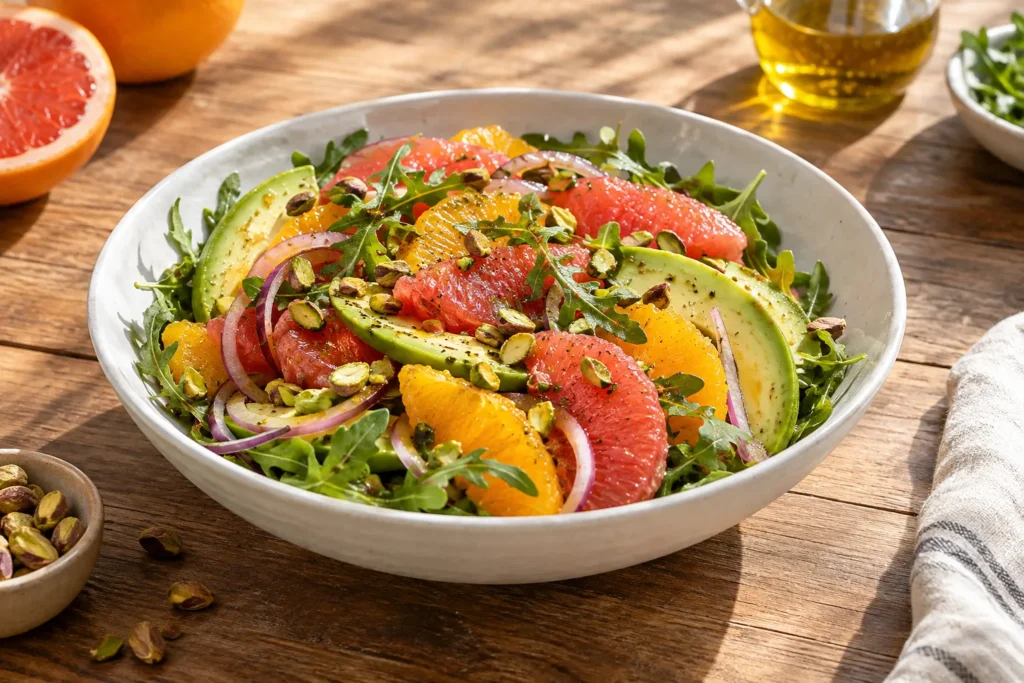
Avocado Citrus Salad pairs creamy avocado with juicy citrus segments, peppery greens, and a light vinaigrette to create a dish that balances richness with acidity. It works as a side, a light lunch, or a holiday-table centerpiece, and it comes together in under 20 minutes with no cooking required.
Key Takeaways
- Avocado Citrus Salad combines ripe avocado, citrus segments (grapefruit, orange, or Meyer lemon), leafy greens, a sharp vegetable like red onion, and a citrus-based vinaigrette.
- Tossing cut avocado in lemon or lime juice slows browning for a few hours; airtight storage slows it further.
- The best dressings use fresh citrus juice, olive oil, a touch of honey or mustard, and sometimes garlic.
- The salad can be prepped ahead in parts, but it tastes best assembled within a day of serving.
- It fits keto, gluten-free, and vegetarian diets, and delivers monounsaturated fat, fiber, vitamin C, and potassium.
- Grapefruit, navel oranges, Cara Cara oranges, mandarins, and Meyer lemon all work well; pummelo and blood orange add variety.
- Nuts and seeds (pistachios, walnuts, pine nuts, sunflower seeds) add protein and crunch without meat.
- Grilled chicken, shrimp, or chickpeas turn the salad into a full meal.
What Ingredients Go in an Avocado Citrus Salad
A standard Avocado Citrus Salad needs five building blocks: greens, citrus, avocado, a crisp allium or vegetable, and a vinaigrette. Beyond that, the recipe flexes based on season and pantry.
Common combinations found across chef-led and grocery-brand recipes include:
- Greens: arugula, baby spinach, kale, or mixed spring greens
- Citrus: grapefruit, navel orange, Cara Cara orange, mandarin, or Meyer lemon
- Avocado: one ripe avocado per two to three servings, sliced or fanned
- Sharp vegetable: thinly sliced red onion, radish, or jicama for contrast
- Crunch: toasted pistachios, walnuts, pine nuts, or sunflower seeds
- Dressing: olive oil, fresh citrus juice, a touch of honey, mustard, or garlic
This greens-plus-citrus-plus-avocado template has stayed consistent for years across grocery chains, specialty producers, and independent chefs, with most variation coming from which citrus variety is in season.
How Do You Keep Avocado from Turning Brown in Salad
Toss cut avocado in fresh lemon or lime juice immediately after slicing to slow oxidation for a few hours. The citric acid in the juice blocks the enzyme that causes browning, which makes this step especially convenient in a citrus salad since the juice is already part of the recipe.
Practical steps for keeping avocado fresh:
- Cut avocado last, right before assembling the salad.
- Coat slices with citrus juice using a brush or by tossing gently.
- Store any leftover avocado in an airtight container with minimal air exposure.
- Keep the pit in with stored avocado halves; it covers a small surface area and can slightly slow browning.
Common mistake: adding avocado to the salad too early and letting it sit uncovered at room temperature. If you’re prepping ahead, hold the avocado separately and fold it in just before serving.
Best Dressing for Avocado Citrus Salad
The best dressing for Avocado Citrus Salad is a simple vinaigrette made from fresh citrus juice, good olive oil, and a small amount of honey or mustard to balance acidity. This approach appears consistently across chef recipes and commercial brands, including versions built around flavored olive oils like blood orange.
A reliable base ratio:
- 3 tablespoons olive oil
- 2 tablespoons fresh citrus juice (lemon, lime, or orange)
- 1 teaspoon honey or Dijon mustard
- Salt and black pepper to taste
- Optional: 1 small clove garlic, minced
Whisk ingredients together or shake in a sealed jar. Choose a citrus-garlic-honey vinaigrette if you want a punchier, more savory profile. Choose a plain lemon-olive oil dressing if the salad already has sweet citrus varieties like Cara Cara orange, since you want the dressing to add acid rather than more sweetness.

Can You Make Avocado Citrus Salad Ahead of Time
Avocado Citrus Salad can be partially prepped ahead, but full assembly should happen close to serving time. Citrus segments, dressing, and chopped greens can be prepared up to two days in advance and stored separately in the refrigerator.
Recommended prep timeline:
- Up to 2 days ahead: segment citrus, make the vinaigrette, wash and dry greens
- Up to 1 day ahead: slice onions or radishes, toast nuts or seeds
- Right before serving: slice avocado, combine all components, dress lightly
Several grocery and retail recipes recommend letting the assembled salad rest 10 to 15 minutes before serving so the citrus juice and olive oil can soften the greens slightly and the flavors can meld. This short rest improves flavor without risking sogginess.
Is Avocado Citrus Salad Healthy
Yes, Avocado Citrus Salad is considered a nutrient-dense dish because it combines healthy monounsaturated fats from avocado, vitamin C and flavonoids from citrus, and vitamin K and folate from leafy greens. It fits comfortably into balanced eating patterns that emphasize whole produce and minimally processed fats.
What the combination contributes:
- Avocado: fiber, potassium, monounsaturated fat
- Citrus: vitamin C, folate, antioxidant flavonoids
- Greens: vitamin K, folate, additional fiber
- Nuts or seeds: plant protein, healthy fats, magnesium
Who it’s good for: home cooks looking for a produce-forward side dish or light meal, vegetarians seeking healthy fat sources, and anyone managing cholesterol who wants to swap saturated fats for unsaturated ones.
Who should be cautious: people managing calorie intake closely should watch portion size, since avocado and nuts are calorie-dense even though they’re nutritious.
How Long Does Avocado Citrus Salad Last in the Fridge
Assembled Avocado Citrus Salad is best eaten within a few hours and should not be stored longer than one day once avocado and dressing are mixed in. The greens wilt and the avocado continues to soften and oxidize even with citrus juice protection.
Storage guidance by component:
| Component | Fridge Life |
|---|---|
| Cut citrus segments (undressed) | 2-3 days |
| Prepared vinaigrette | Up to 5 days |
| Washed, dried greens | 3-4 days |
| Assembled salad with avocado | Same day, up to 24 hours max |
If you have leftovers, expect the avocado to brown slightly and the greens to lose crispness. It’s still safe to eat within a day but the texture won’t match a fresh batch.
What Citrus Fruits Work Best in Avocado Salad
Grapefruit, navel oranges, and Meyer lemon are the most commonly used citrus fruits in Avocado Citrus Salad because they balance sweetness, acidity, and visual contrast. Specialty varieties like Cara Cara orange, blood orange, mandarin, and pummelo add variation without changing the basic formula.
Quick comparison for choosing citrus:
- Choose grapefruit if you want bitterness to offset the richness of avocado
- Choose navel or Cara Cara orange if you want a sweeter, kid-friendly version
- Choose Meyer lemon for a brighter, more acidic salad that pairs well with pungent greens like arugula
- Choose mandarin or blood orange for a visually striking, slightly tart option during winter months
Many recipes mix two or three citrus types in one bowl for layered flavor and color, a technique seen in both chef recipes and specialty produce brands.
Can I Meal Prep Avocado Citrus Salad
Avocado Citrus Salad can be meal-prepped in components, but it does not hold up well as a fully assembled dish stored for multiple days. The most effective meal-prep approach separates wet and delicate ingredients from sturdy ones.
Meal-prep method:
- Store citrus segments and vinaigrette in separate sealed containers.
- Keep washed greens in a container lined with paper towel to absorb moisture.
- Slice avocado fresh each day, or buy slightly underripe avocados and ripen them in stages.
- Combine all parts just before eating, within 5 minutes of serving.
Edge case: if you’re prepping lunches for the week, consider swapping fresh avocado slices for avocado added at the table, since pre-sliced avocado degrades faster than any other component.
What Greens Pair Well with Avocado and Citrus
Arugula, baby spinach, and mixed baby greens pair especially well with avocado and citrus because their mild bitterness and tender texture complement both the creamy avocado and the bright citrus acidity. Heartier greens like kale work too, particularly in winter versions of the salad.
- Arugula: peppery, holds up well against citrus acid
- Baby spinach: mild, tender, blends easily with dressing
- Kale (massaged): sturdier, good for make-ahead versions since it doesn’t wilt as fast
- Mixed spring greens: balanced flavor, visually varied
Choose arugula if you want a more assertive, restaurant-style salad. Choose spinach or mixed greens if you’re serving guests who prefer milder flavors.
What Protein Can I Add to Avocado Citrus Salad
Grilled chicken, shrimp, and chickpeas are the most common proteins added to Avocado Citrus Salad to turn it into a complete meal. Each option changes the flavor profile and dietary fit slightly.
- Grilled chicken breast: neutral flavor, works with any citrus combination
- Shrimp: pairs especially well with lime or grapefruit versions
- Chickpeas or white beans: best for vegetarian or vegan versions
- Toasted nuts and seeds: pistachios, walnuts, and sunflower seeds add plant protein without animal products
Choose seafood if the salad is a warm-weather main course. Choose legumes or nuts if you want a plant-based protein boost without extra cooking.
Is Avocado Citrus Salad Keto Friendly
A traditional Avocado Citrus Salad is not strictly keto because citrus fruit contains natural sugars that can push carb counts higher than typical keto limits, especially with sweeter oranges. It can be adapted for keto by adjusting citrus quantity and type.
Keto-friendly adjustments:
- Use lower-sugar citrus like grapefruit or Meyer lemon instead of orange
- Reduce citrus segments to a light garnish rather than a main component
- Skip the honey in the vinaigrette and use a sugar-free sweetener or omit it entirely
- Boost fat and protein with extra avocado, olive oil, and nuts
Decision rule: choose grapefruit-based, honey-free versions if you’re tracking strict keto macros. Choose standard orange-based versions if you’re not counting carbs closely.
How to Cut Avocado for Salad Without It Getting Mushy
Use a ripe but firm avocado and a sharp knife, cutting slices just before assembling the salad to prevent mushiness. Overripe avocado or excessive handling causes the flesh to break down and lose its shape.
Step-by-step technique:
- Choose an avocado that yields slightly to gentle pressure but isn’t soft throughout.
- Cut in half lengthwise around the pit, twist to separate.
- Remove the pit carefully with a spoon or knife tap.
- Score the flesh in a grid pattern while still in the skin, then scoop out with a spoon for clean cubes, or slice directly for fans.
- Handle slices gently and place them on top of the salad last, rather than tossing them in with other ingredients.
Common mistake: tossing avocado vigorously with other salad ingredients, which breaks down the flesh and creates a mushy texture throughout the bowl.
What Can I Substitute for Avocado in Citrus Salad
Avocado can be substituted with hearts of palm, fresh mozzarella, or extra toasted nuts for people who need to avoid avocado due to allergy, taste preference, or availability. Each substitute changes the texture and richness of the dish differently.
- Hearts of palm: mild, slightly tangy, similar texture to soft avocado slices
- Fresh mozzarella: adds creaminess with a different flavor profile, works well with citrus
- Extra nuts (pistachios, walnuts): adds richness and crunch without the creamy avocado texture
- Diced cucumber: a lighter, lower-fat option for a crisp, refreshing version
Choose hearts of palm if you want the closest textural match. Choose mozzarella if richness matters more than matching avocado’s exact texture.
Why Does My Avocado Citrus Salad Taste Bitter or Bland
Avocado Citrus Salad tastes bitter when grapefruit pith is left on the segments, or bland when the dressing lacks enough acid, salt, or sweetness to balance the ingredients. Both issues are fixable with small adjustments.
Troubleshooting guide:
- Bitter taste: remove all white pith from grapefruit segments; pith carries most of the bitterness, not the fruit itself
- Bland taste: add more salt and a touch more citrus juice to the dressing; under-salted dressing is the most common cause of a flat-tasting salad
- Too acidic: balance with a small amount of honey or a milder citrus like orange
- Watery dressing: use less juice and more olive oil, or whisk in a small amount of mustard to help emulsify
Quick example: if a grapefruit-heavy salad tastes sharp and bitter, swap half the grapefruit for navel orange and add a half-teaspoon of honey to the vinaigrette to restore balance.
Conclusion
Avocado Citrus Salad earns its place on modern menus because it delivers contrast: creamy avocado against bright citrus, peppery greens against sweet fruit, crunchy nuts against soft textures. The formula is forgiving enough for home cooks to adapt with whatever citrus is in season, yet precise enough that small missteps, like leftover pith or an unbalanced dressing, show up immediately in the final bite.
Start with the basic template of greens, citrus, avocado, a sharp vegetable, and a light vinaigrette. Then adjust citrus variety, add a protein if you want a full meal, and dress the salad just before serving to keep every component at its best. Once the balance feels right, this salad becomes a reliable, fast dish that works for a weeknight lunch or a holiday table.