Last updated: October 22, 2026
Quick Answer
Chicken and Coconut in Banana Leaves is a steamed or grilled dish in which chicken pieces are marinated in coconut milk, aromatics, and spices, then wrapped tightly in banana leaves and cooked until tender and infused with smoky, herbal flavor. The leaf acts as both a cooking vessel and a flavor carrier, sealing in moisture while imparting a subtle grassy note found across Thai, Indonesian, and broader Southeast Asian cooking. It typically takes 45 to 75 minutes from prep to plate and works well for both weeknight dinners and special-occasion meals.
Key Takeaways
- Chicken and Coconut in Banana Leaves is a steamed or baked parcel dish built on coconut milk, chicken, and aromatic herbs wrapped in banana leaf.
- The dish has roots across Thailand (Kai Hor Bai Tong), Indonesia (Pepes Ayam), and other Southeast Asian kitchens, each with regional seasoning variations.
- Steaming typically takes 30 to 45 minutes; grilling or baking can run slightly shorter but requires closer monitoring.
- Foil can substitute for banana leaves in a pinch, but it will not replicate the leaf’s herbal aroma.
- Fresh or frozen banana leaves are sold at most Asian grocery stores and some well-stocked supermarkets.
- The dish is naturally gluten-free and dairy-free when made with standard ingredients.
- Common mistakes include underseasoning the coconut marinade and wrapping too loosely, which lets steam escape.
- Cooked parcels freeze well for up to three months, making this a strong meal-prep option.
- Rice, pickled vegetables, and a simple cucumber salad are classic accompaniments.
What Is Chicken and Coconut in Banana Leaves
Chicken and Coconut in Banana Leaves is a dish in which bone-in or boneless chicken is coated in a seasoned coconut milk mixture and enclosed in banana leaf before steaming, baking, or grilling. The leaf traps moisture and heat, producing chicken that is fall-apart tender with a faint herbal, almost tea-like fragrance that plastic or foil cannot reproduce.
The coconut component usually includes coconut milk or grated coconut combined with aromatics such as garlic, ginger, lemongrass, shallots, turmeric, and chili. Some versions add kaffir lime leaf or galangal for a brighter, more citrus-forward profile. The banana leaf is never eaten; it is discarded after cooking, much like parchment paper, but it contributes flavor that parchment cannot match.
Where Does This Dish Come From
Chicken and Coconut in Banana Leaves traces its roots to Southeast Asia, where banana leaves have served as natural food wrapping and cooking material for centuries due to their size, flexibility, and heat resistance. Thailand’s Kai Hor Bai Tong (chicken wrapped in banana leaf) and Indonesia’s Pepes Ayam are two of the most documented regional versions, each reflecting local spice blends and cooking traditions.
In Thailand, the dish often leans toward a fried or grilled finish after an initial steam, with a marinade built on fish sauce, garlic, and cilantro root. Indonesian Pepes Ayam, by contrast, uses a thicker spice paste (bumbu) heavy on candlenut, turmeric, and chili, and is almost always steamed before a final light grilling. Cambodia and Laos have their own analogues, including Tum Ayam-style preparations that lean on lemongrass and fermented fish paste. These regional differences mean there is no single “authentic” recipe, but rather a family of dishes united by the same wrapping technique and the shared use of coconut as a tenderizing, flavor-carrying base.
How Do You Cook Chicken Wrapped in Banana Leaves
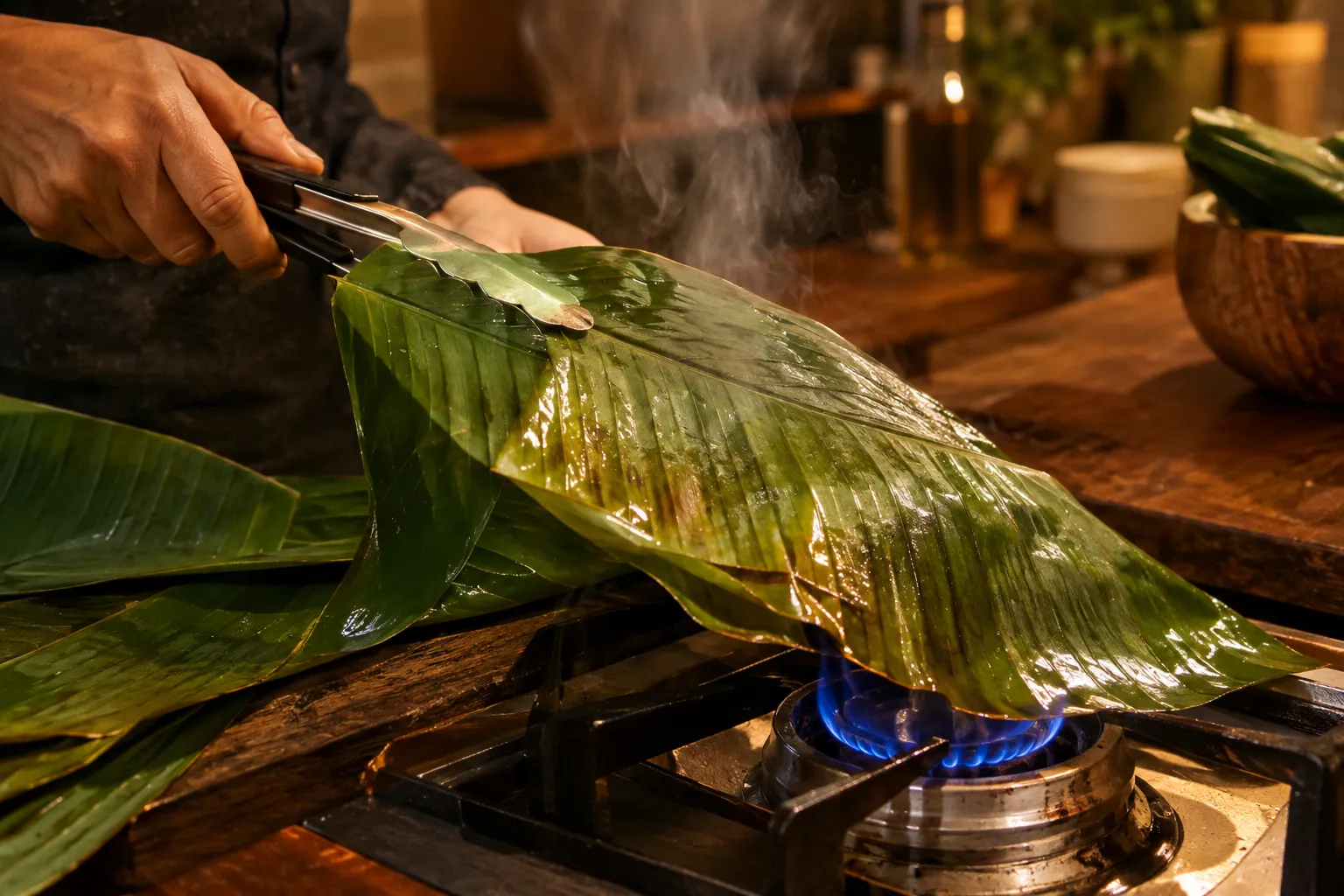
Cooking chicken wrapped in banana leaves involves marinating the meat in a coconut-based mixture, wrapping it tightly in softened banana leaf, and then steaming, baking, or grilling it until the internal temperature reaches a safe level. The leaf must be softened first, either by passing it briefly over an open flame or blanching it in hot water, so it bends without cracking.
Basic steps:
- Marinate chicken pieces in coconut milk, garlic, ginger, lemongrass, turmeric, and salt for at least 30 minutes.
- Soften banana leaves over a flame or in hot water until pliable.
- Lay a piece of chicken with marinade in the center of the leaf.
- Fold the leaf into a tight rectangular or triangular parcel and secure with kitchen twine or toothpicks.
- Steam, bake, or grill until the chicken reaches 165 degrees Fahrenheit internally.
- Let the parcel rest briefly before opening to allow juices to redistribute.
A common mistake is wrapping the parcel too loosely, which allows steam to escape and dries out the chicken. A tight, well-secured wrap is the single biggest factor separating a moist result from a dry one.
How Long Does It Take to Steam or Cook
Chicken and Coconut in Banana Leaves generally takes 30 to 45 minutes to steam fully, depending on whether the chicken is boneless or bone-in. Boneless thigh or breast pieces cook faster, while bone-in cuts need the longer end of that range to reach a safe internal temperature.
For other methods:
- Steaming: 30 to 45 minutes over simmering water.
- Baking: 35 to 45 minutes at 375 degrees Fahrenheit.
- Grilling: 20 to 30 minutes over medium-high heat, turning occasionally.
Always verify doneness with a meat thermometer inserted through the leaf into the thickest part of the chicken. Visual cues are unreliable here because the leaf obscures the meat.
Can You Use Foil Instead of Banana Leaves
Aluminum foil can replace banana leaves functionally, trapping steam and holding shape, but it will not impart the grassy, faintly sweet aroma that banana leaf contributes. Foil is a reasonable backup when fresh or frozen leaves are unavailable, but it changes the dish’s character rather than simply standing in for it.
For cooks who want to approximate the flavor while using foil, adding a few torn pandan leaves or extra lemongrass to the marinade can help compensate. This is a workaround, not a true substitute, and should be treated as such when describing the dish to guests.
Where Do You Buy Banana Leaves
Banana leaves are most reliably found at Asian grocery stores, Latin American markets, and specialty produce shops, usually sold fresh in rolled bundles or frozen in flat packages. Frozen leaves are often easier to work with because freezing naturally softens the fibers, reducing the risk of tearing during wrapping.
If no specialty market is nearby, check the frozen aisle of large international grocery chains or order online from Asian grocery delivery services, which ship frozen leaves in vacuum-sealed packs.
What Is the Difference Between This and Thai Coconut Curry
Chicken and Coconut in Banana Leaves is a dry-wrapped, steamed or grilled preparation, while Thai coconut curry (such as gaeng kiew wan) is a simmered, sauce-based dish served in liquid form over rice. The banana leaf version concentrates flavor through sealed steam rather than an open simmering pot, producing a firmer, less saucy texture.
| Feature | Chicken and Coconut in Banana Leaves | Thai Coconut Curry |
|---|---|---|
| Cooking method | Steamed, baked, or grilled in a sealed wrap | Simmered in an open pot |
| Texture | Dense, moist, slightly fibrous from marinade | Loose, saucy, spoonable |
| Serving style | Unwrapped at the table, plated dry | Ladled over rice |
| Spice base | Milder, herb-forward | Often spicier, curry-paste based |
Choose the banana leaf version if you want a presentation-forward, individually portioned dish. Choose curry if you want a communal, sauce-heavy meal.
Is It Gluten Free and Dairy Free
Chicken and Coconut in Banana Leaves is naturally gluten-free and dairy-free when made with standard ingredients like coconut milk, fresh aromatics, and fish sauce in place of soy-based sauces. Cooks with gluten sensitivities should double-check fish sauce and any packaged spice pastes, since some brands add wheat-based fillers.
For strict dairy-free diets, coconut milk is already a non-dairy ingredient, so no substitution is needed. This makes the dish a convenient option for mixed dietary households.
What Are Common Mistakes People Make
The most frequent mistakes are underseasoning the marinade, wrapping too loosely, and skipping the leaf-softening step. Each of these directly affects texture, flavor, or structural integrity of the parcel.
- Underseasoning: Coconut milk mutes salt and spice, so the marinade needs a firmer hand than expected.
- Loose wrapping: Steam escapes, drying out the chicken and weakening the leaf’s flavor transfer.
- Skipping the flame pass: Unsoftened leaves crack and tear, leaking marinade during cooking.
- Overcrowding the steamer: Parcels touching each other cook unevenly.
A quick example: a home cook who skips softening the leaf often ends up with a torn parcel that leaks coconut milk into the steamer water, leaving the chicken drier than intended.
Can You Freeze It After Cooking
Yes, cooked Chicken and Coconut in Banana Leaves freezes well for up to three months when stored in an airtight container or freezer bag. The banana leaf wrapping can stay on during freezing, which helps preserve moisture during reheating.
To reheat, steam the frozen parcel directly for 15 to 20 minutes, or thaw overnight in the refrigerator and steam for 10 minutes. Microwaving is possible but can toughen the chicken, so steaming is the preferred method.
What Side Dishes Go Well With It
Steamed jasmine rice, a cucumber and shallot salad, and pickled vegetables are classic pairings that balance the richness of the coconut marinade. A light, acidic side cuts through the fat in the coconut milk, which keeps the plate from feeling heavy.
Other strong pairings include a simple green papaya salad, stir-fried water spinach with garlic, or a bowl of clear lemongrass soup. Avoid pairing with another heavy coconut-based dish, since the flavors will compete rather than complement.
Can You Grill It or Does It Have to Be Steamed
Grilling is a valid alternative to steaming and is common in contemporary variations of this dish, producing a smokier result with light charring on the leaf’s exterior. Steaming remains the more traditional method because it keeps the chicken fully moist without risk of drying out over direct heat.
Choose grilling if you want a smoky, slightly charred flavor and have a reliable thermometer to prevent overcooking. Choose steaming if you want guaranteed moisture and a more delicate, herbal flavor profile without any char.
What if You Cannot Find Fresh Banana Leaves
Frozen banana leaves, available at most Asian grocery stores, are an excellent substitute for fresh leaves and are often easier to fold since freezing softens the fibers. If neither fresh nor frozen leaves are accessible, foil or parchment paper wrapped with added lemongrass or pandan can approximate the moisture-sealing effect, though the signature aroma will be missing.
Is It Good for Meal Prep
Yes, Chicken and Coconut in Banana Leaves is well suited for meal prep because the parcels portion naturally, reheat cleanly by steaming, and hold their moisture better than many other proteins stored in the refrigerator. Preparing four to six parcels at once and freezing half is a practical way to stretch one cooking session across multiple meals.
FAQs
Can children eat this dish? Yes, as long as spice levels like chili are reduced or omitted, the dish is mild, protein-rich, and suitable for most children.
Does the banana leaf need to be removed before eating? Yes, the banana leaf is not edible and should be unwrapped and discarded before serving the chicken.
How do I know the chicken is fully cooked? Insert a meat thermometer through the leaf into the thickest part of the chicken; it should read 165 degrees Fahrenheit.
Can I use chicken breast instead of thigh? Yes, but breast meat cooks faster and dries out more easily, so reduce cooking time by about five to ten minutes.
Is this dish spicy? Base recipes are typically mild to moderately spiced; heat level depends on how much chili is added to the marinade.
Can I make this dish ahead of time? Yes, parcels can be assembled a day ahead and refrigerated uncooked, then steamed just before serving.
Conclusion
Chicken and Coconut in Banana Leaves rewards a bit of extra prep time with a dish that tastes far more complex than its ingredient list suggests. The technique is forgiving once the leaf-softening and tight-wrapping steps are mastered, and the payoff is tender, aromatic chicken that works for weeknight dinners or a dinner-party centerpiece. Start by sourcing frozen banana leaves from a local Asian grocer, build a well-seasoned coconut marinade, and steam a test batch before committing to a larger meal-prep run.
chicken and coconut in banana leaves, banana leaf cooking, Southeast Asian recipes, Thai chicken dishes, Indonesian pepes ayam, coconut milk chicken, steamed chicken parcels, gluten free chicken recipes, meal prep chicken, grilled banana leaf chicken